How to read a Destiny Matrix
You have a finished diagram, a page of interpretations and suddenly more numbers than clarity. That is normal. Read a matrix as a route, not as a final answer about your fate: understand where you are, choose one theme, then check it against ordinary life.
- Section
- Numerology Basics
- Reading
- 5 min read
- Author
- ArcFlow
- Updated
- Audio
A matrix is not a label you must earn
The 22-arcana method combines date numerology, archetypal language and ideas about recurring cause-and-effect patterns. It is a self-reflection tradition, not a scientific diagnosis. It can raise a useful question; it cannot explain every relationship or schedule a future event.
The common trap is reading one shadow description and deciding something is wrong with you. The opposite trap is collecting only flattering lines. Both lose the useful part: asking where a reaction appears, when it helps and when it costs too much.
Three languages inside the method
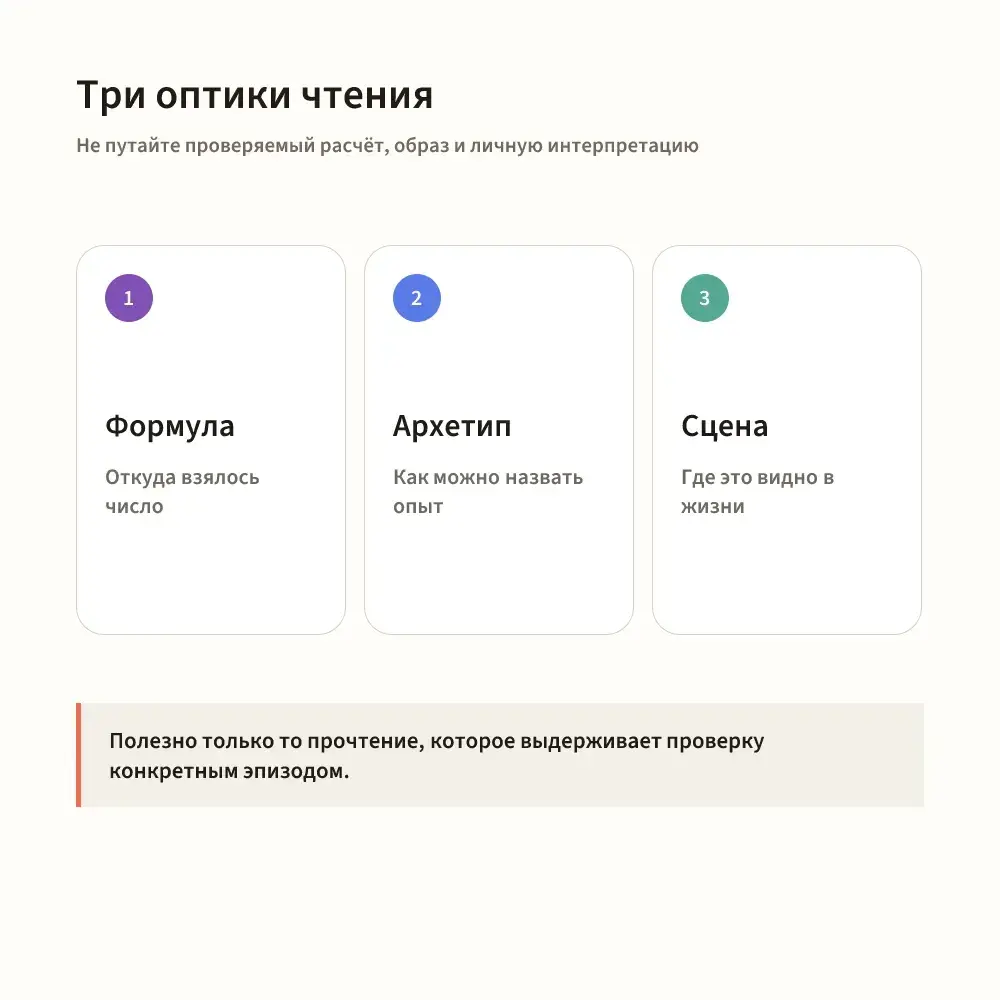
Numbers provide the calculation structure: some nodes are basic, others are sums. That part can be repeated and checked. Arcana are images such as leadership, choice, boundaries, pause or change; they can name an experience, not prove that everyone with a number lives the same story.
Karmic and family narratives are spiritual language for some people and metaphors for family patterns for others. Neither should become an accusation against parents or proof of a “bad fate”. If a theme hurts sharply, a therapist is a safer place to work with it.
Find the address before the meaning
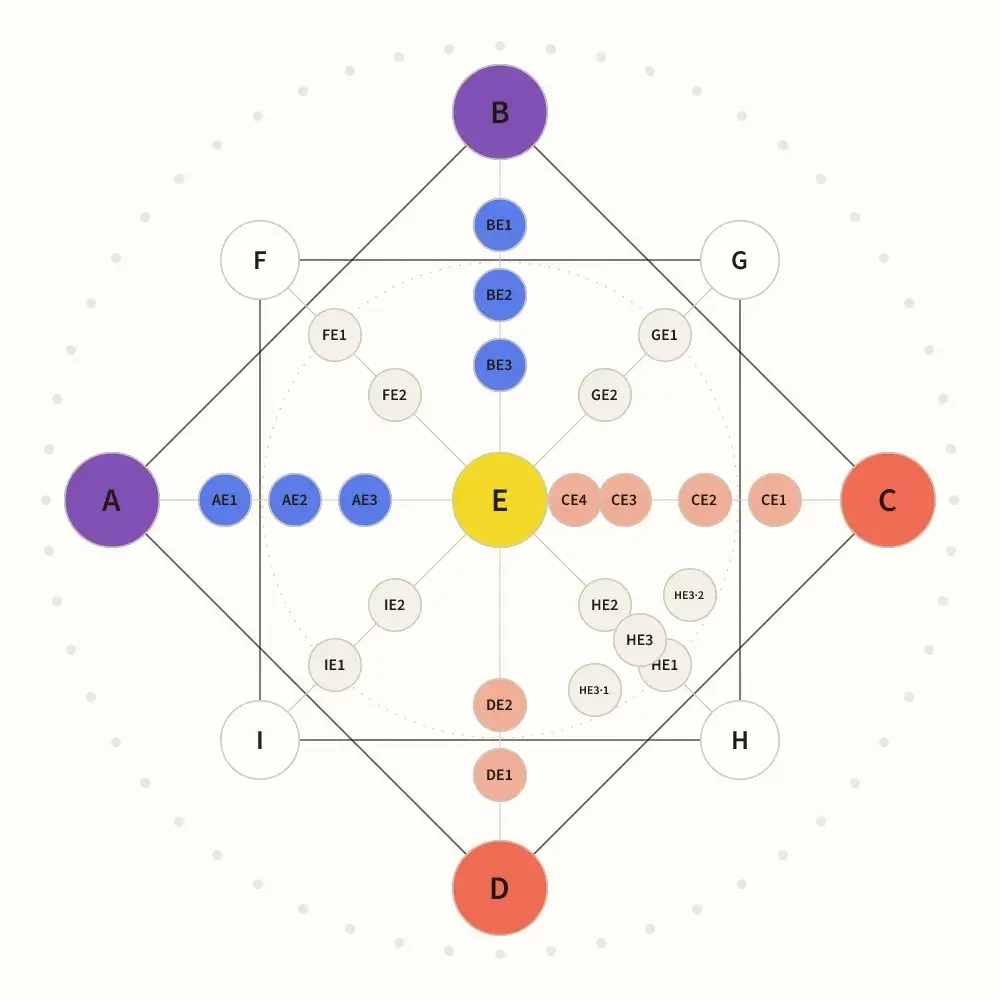
First locate A, B, C, D and E: these are the primary points. Then see F, G, H and I as the family contour. Derived nodes such as AE1, CE4 or HE3 only make sense together with the points they were calculated from.
In ArcFlow every derived node has a formula. Read the address and its sources first; only then move to the arcana text. It keeps a memorable interpretation from floating free of the diagram.
A reading order that does not overwhelm
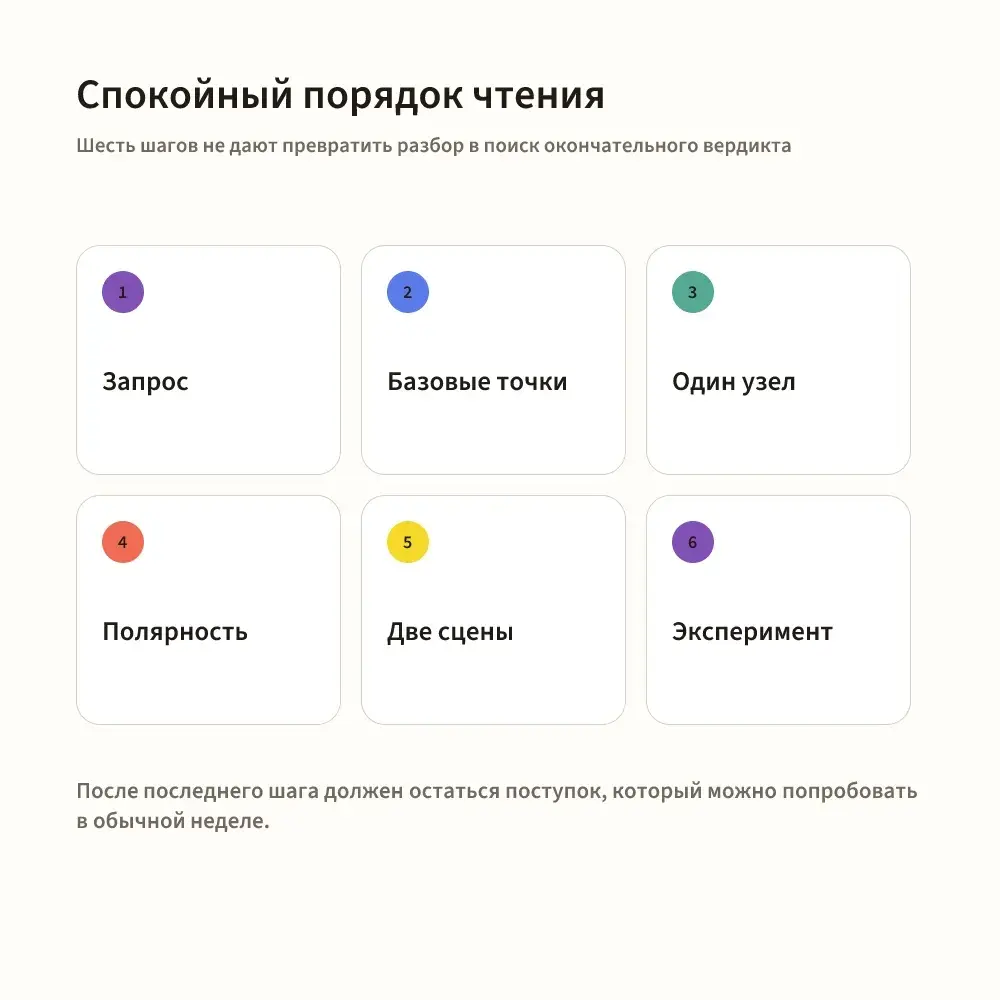
Read your diagram in one calm evening
Name a live question
Choose one concrete theme rather than trying to learn everything.
See the base values
Read day, month, year and centre, keeping only phrases you can confirm with a real example.
Choose one thematic node
Relationships, money, talents or an age period: one line is enough.
Notice polarity
Ask what happens under stress and what restores steadiness.
Check life scenes
Write one recent scene where the pattern helped and one where it cost you.
Pick a small experiment
One conversation, one boundary or five minutes of notes is more useful than an abstract vow.
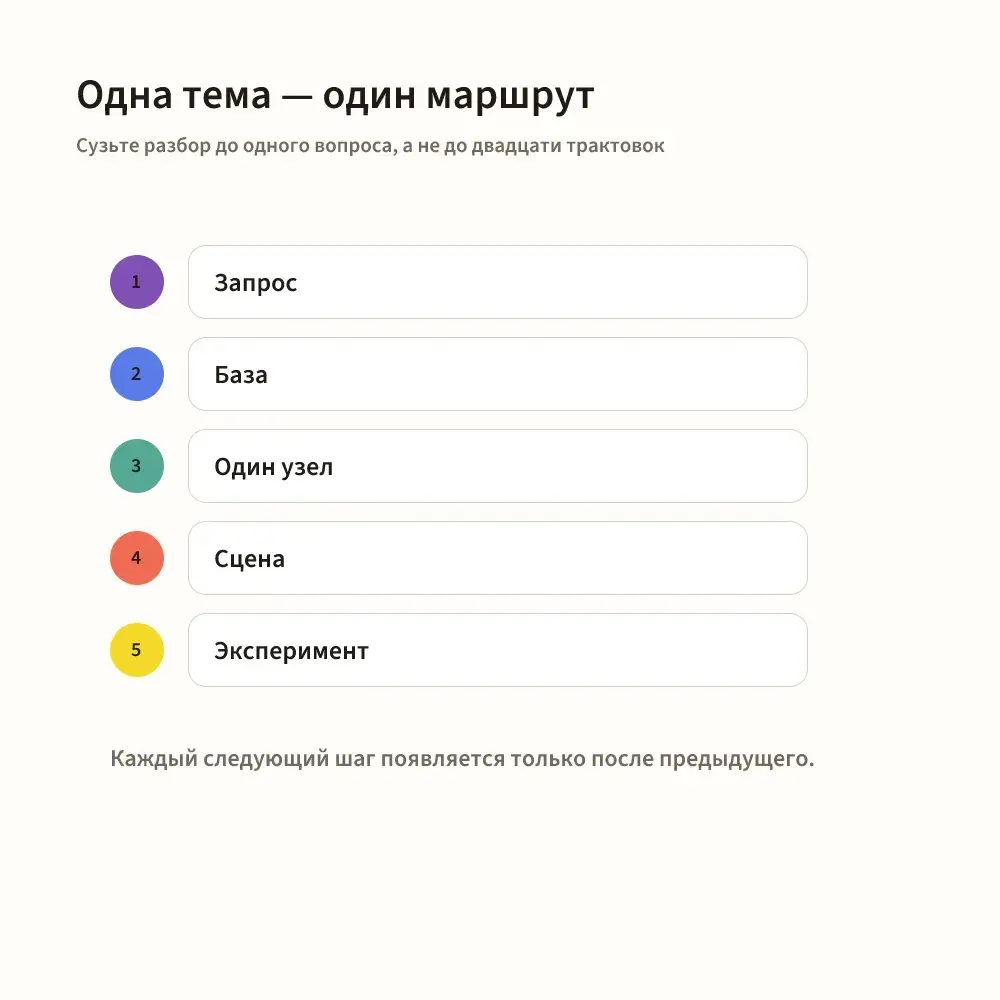
One topic, one route
Write a question in ordinary words: “Why do I keep delaying the price conversation?” rather than “What is wrong with my money?” Then choose only the connected nodes and take one note from each. Different descriptions may belong to different settings, such as work and home, rather than contradicting one another.
Plus and minus without mysticism
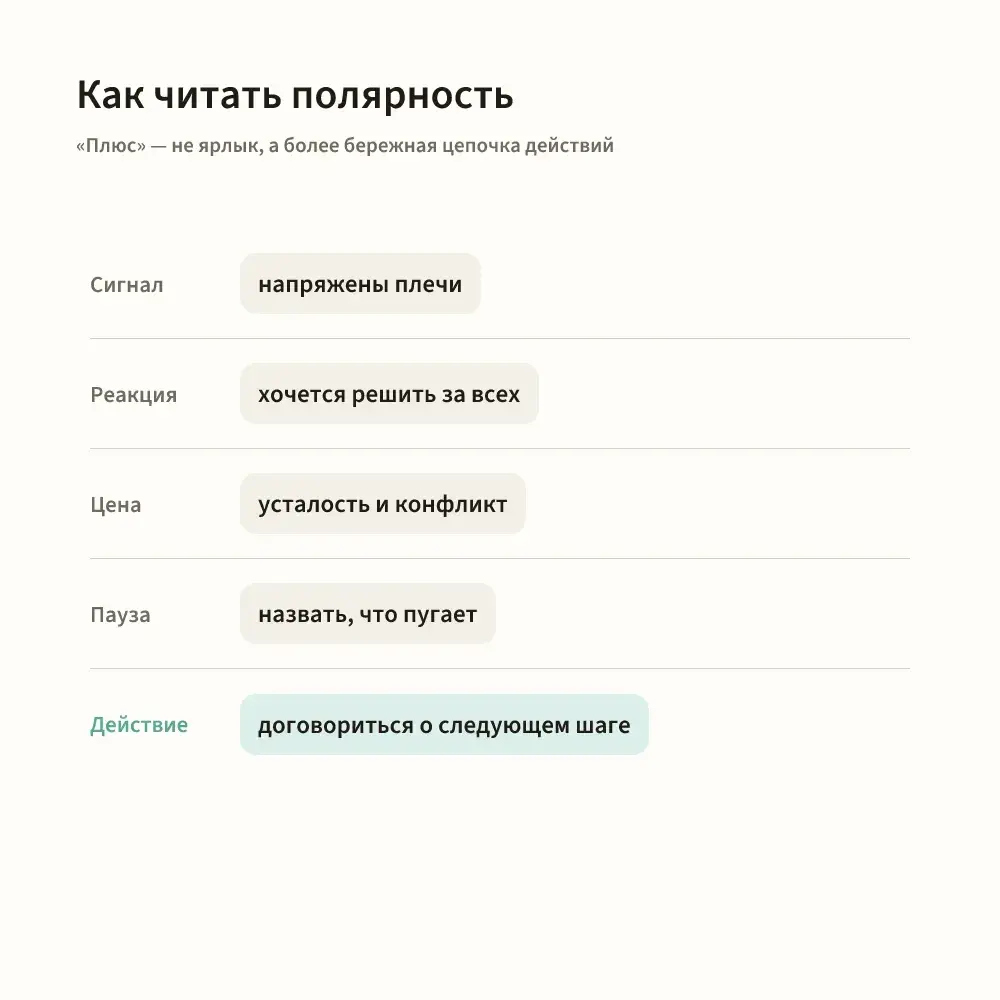
In this vocabulary, plus and minus are not good and bad people. They describe how one quality behaves in different conditions. Decisiveness can settle a deadline or, under overload, become deciding for everyone. Sensitivity can hear a partner or, under fear, turn a short text into a catastrophe.
There is no permanent switch into “plus”. Notice the early signal — tense shoulders, an urge to send three messages, irritation at someone’s pace — and choose a pause that does not make the situation worse.
Under pressure: “I must understand everything now”
You read every section, collect contradictions and find proof that something is wrong with you. The matrix becomes another way to worry.
In resource: “I take one theme”
You choose one situation, read only connected nodes and write a note. If it does not fit, you leave it. If it does, you test it against facts and choose one small next step.
Love, money and family: look for a pattern, not a destiny
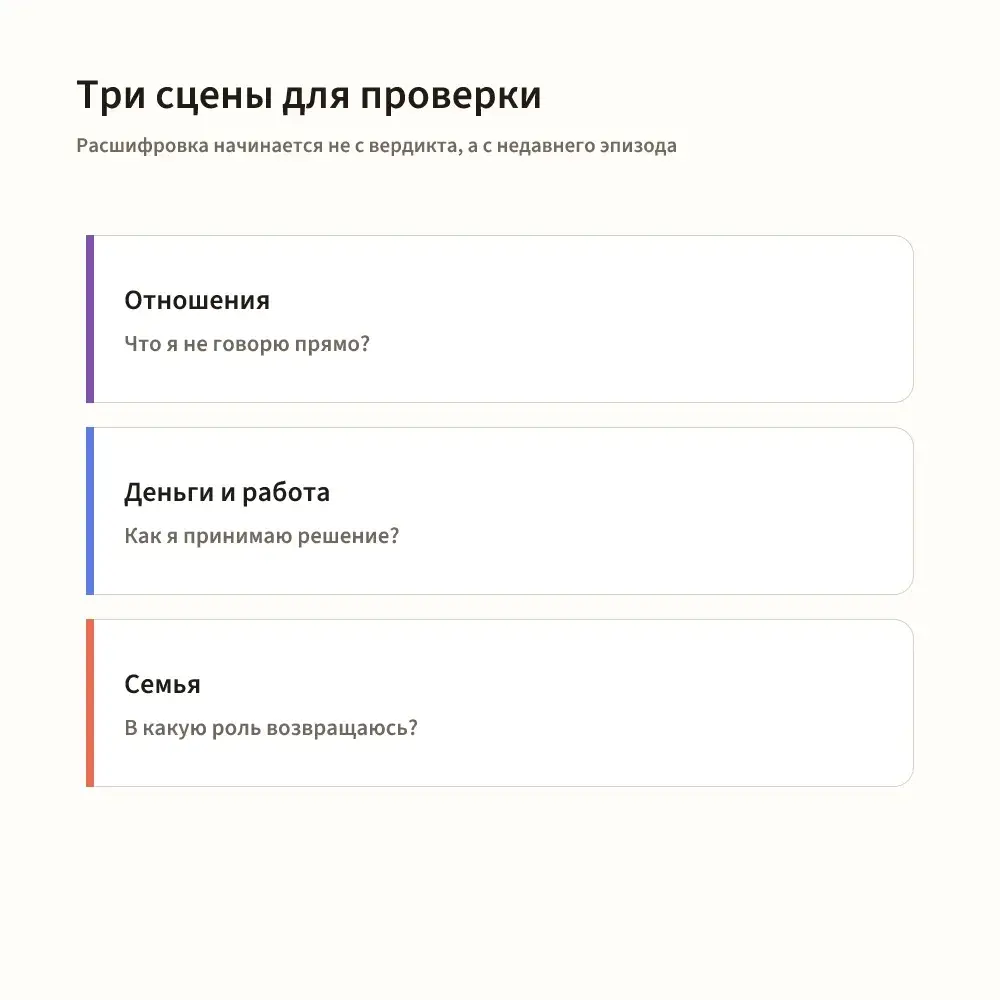
In relationships, the useful question is how you approach or protect yourself: do you choose unavailable people, go silent when hurt, turn care into control? For money, look at decisions rather than promises of wealth: taking every project, delaying a price conversation or spending to quiet anxiety.
Family themes require the most care. A matrix does not prove that a parent “gave you a programme”. It can help notice a familiar role — rescuer, high achiever, invisible child, the only adult — and that role can be changed gradually and with support.
Do not let an interpretation outrun your life
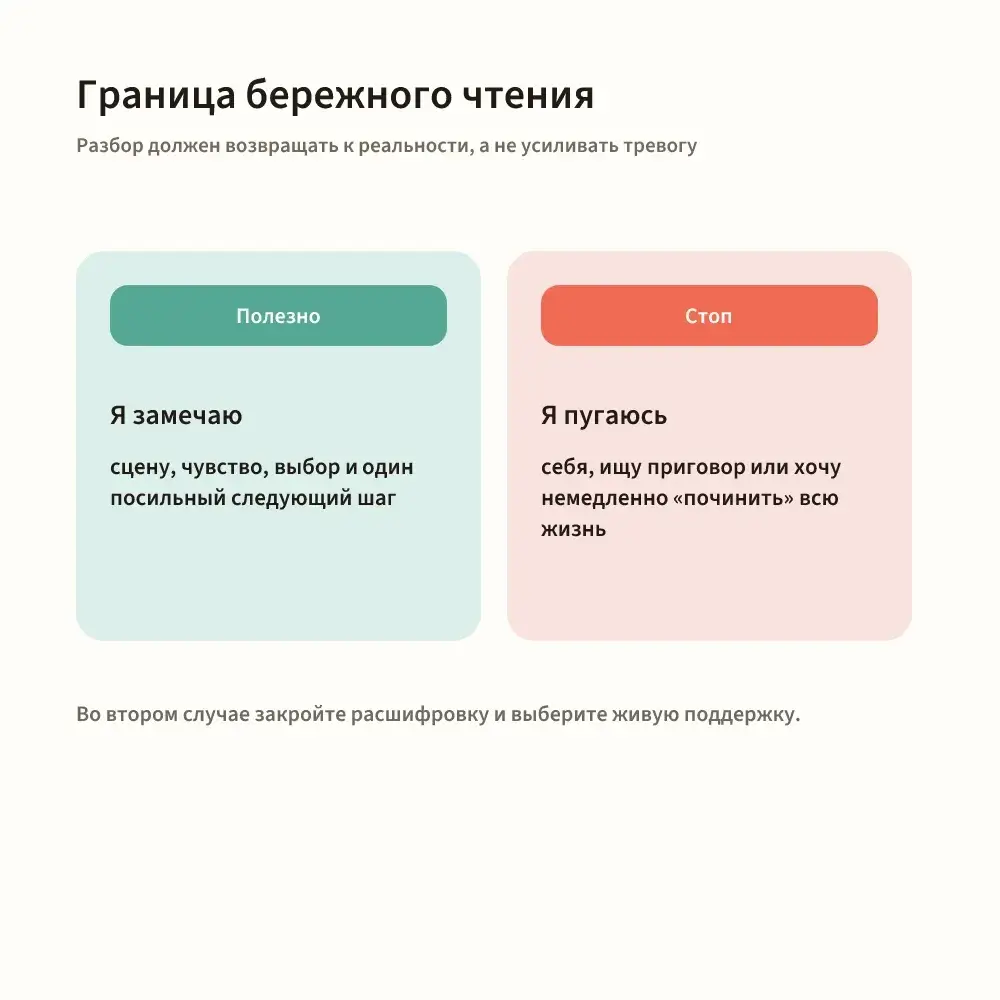
Do not make major decisions about health, credit, work or a relationship because of a matrix. Those choices need facts, time and conversation with the people involved. Stop if reading adds panic, shame or a need to “fix yourself” immediately; return to ordinary support and speak with a professional when difficult feelings persist.
Questions readers ask
With one live question and the base values, then one thematic node related to your situation.
Do not force it. Schools differ and a birth date is not your whole life.
Only with respect for their boundaries. Never use it as a diagnosis or an argument in a conflict.
Open your matrix and begin with one question
ArcFlow will build the diagram from a birth date. Choose a calm topic and read without chasing a final verdict.
Open my Matrix