How the Destiny Matrix is calculated
The matrix looks complicated only when it is a cloud of numbers. In practice it is a chain of additions based on a birth date: each new node comes from values already found. Here is the ArcFlow logic, the 1–22 reduction rule and a sensible way to check the math.
- Section
- Numerology Basics
- Reading
- 5 min read
- Author
- ArcFlow
- Updated
- Audio
What this calculation is and is not
The Destiny Matrix in the 22-arcana tradition is an interpretive framework built from a birth date. It is not a personality measurement or a timetable of future events. It can be useful as a set of questions about initiative, boundaries, money, intimacy and familiar reactions.
In ArcFlow, the date becomes a network of nodes. Every node has visible inputs: one may add day and month, another may use the centre calculated before it. There is no hidden substitution in the calculator — only the date, addition and a reduction rule.
The rule behind every formula
Matrix nodes stay between 1 and 22. When a sum is larger than 22, add its digits until it returns to that range: 27 becomes 2 + 7 = 9, and 39 becomes 3 + 9 = 12. Twenty-two remains a value in its own right.
This is not ordinary single-digit reduction. Fourteen, seventeen and twenty-two do not become 5, 8 and 4. Write a full sum beside its result — for example, 19 + 9 = 28 → 10 — and the sequence becomes easy to audit.
Five core points: a date becomes a framework
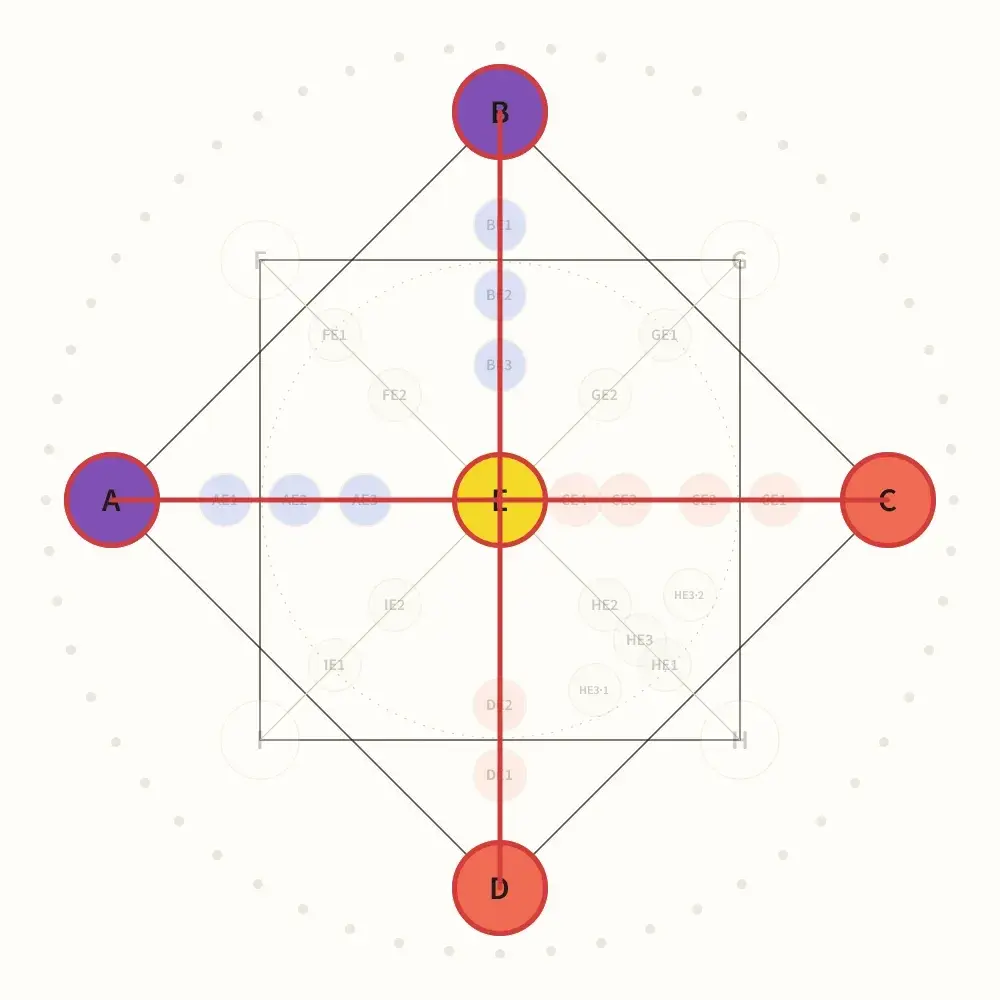
Start with three parts of the date: A is the day, B the month, and C the year reduced to 1–22. Then D is A + B + C, and E is A + B + C + D. Apply the same reduction after every operation.
For 19 September 1994, A = 19 and B = 9. The year is 1 + 9 + 9 + 4 = 23 → 5, so C = 5. Then D = 19 + 9 + 5 = 33 → 6, and E = 19 + 9 + 5 + 6 = 39 → 12. These five values are the starting supports for the rest of the diagram.
Check one date by hand
Split the date
Write down day, month and each year digit. Reduce the year if needed.
Find D
Add A, B and C, then reduce to 1–22.
Find E
Add A, B, C and D, then reduce again.
Compare with ArcFlow
Enter the same date in the calculator. Matching values mean the main rule is clear.
How the rest of the nodes grow
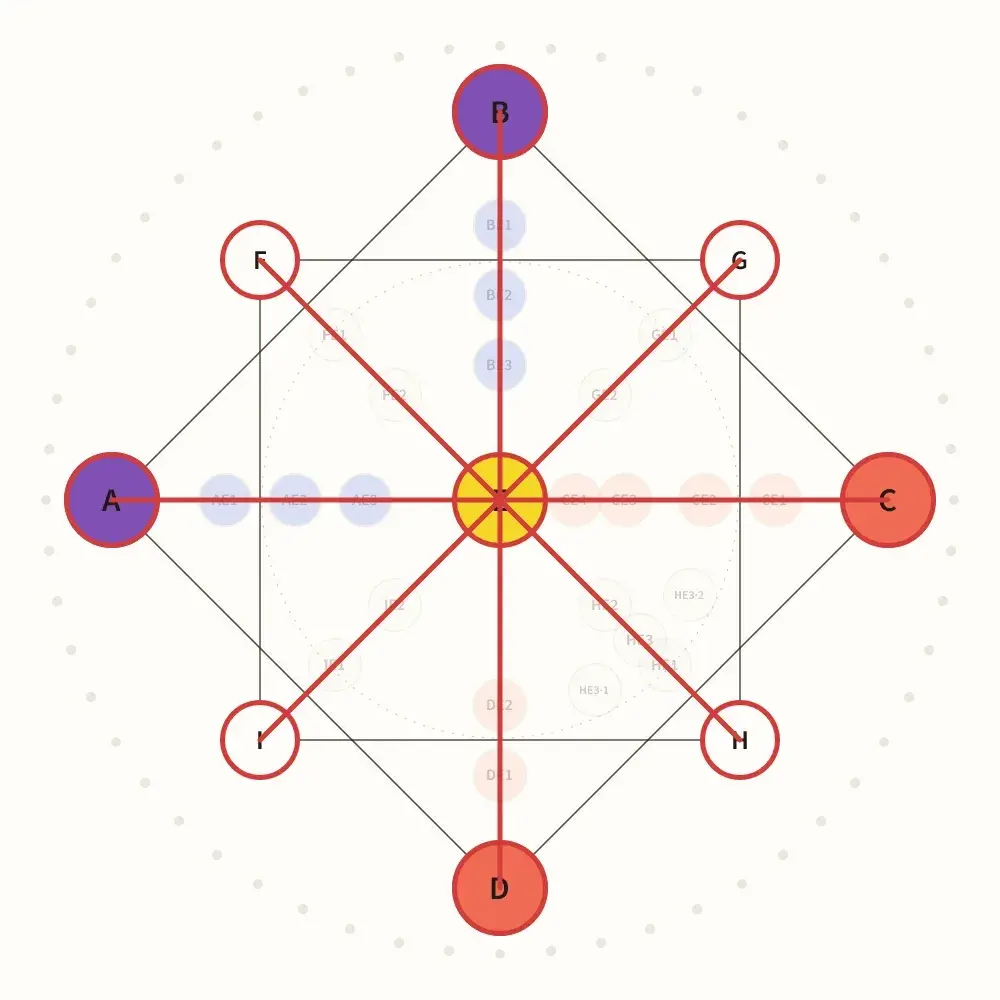
The next nodes are built from the values already found. The surrounding points include A + B, B + C, C + D and A + D; their sum gives the centre of the family square. The personal contour continues in the same way, adding the centre to its corresponding base value.
You do not need to memorise every letter. The useful idea is that every point has parent values that can be highlighted and checked. Thematic groups for relationships, money, talents and age periods help organise reading; they should not become a final verdict about a life.
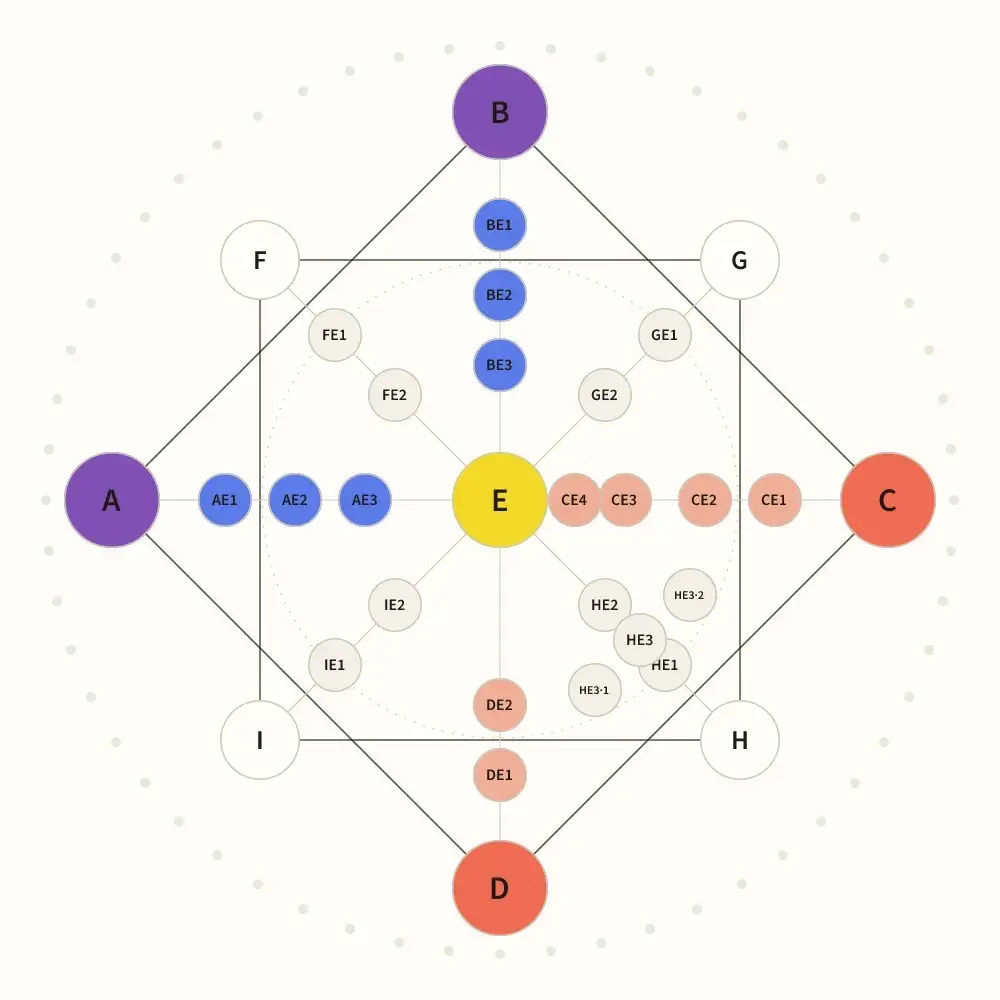
Letter map and both contours
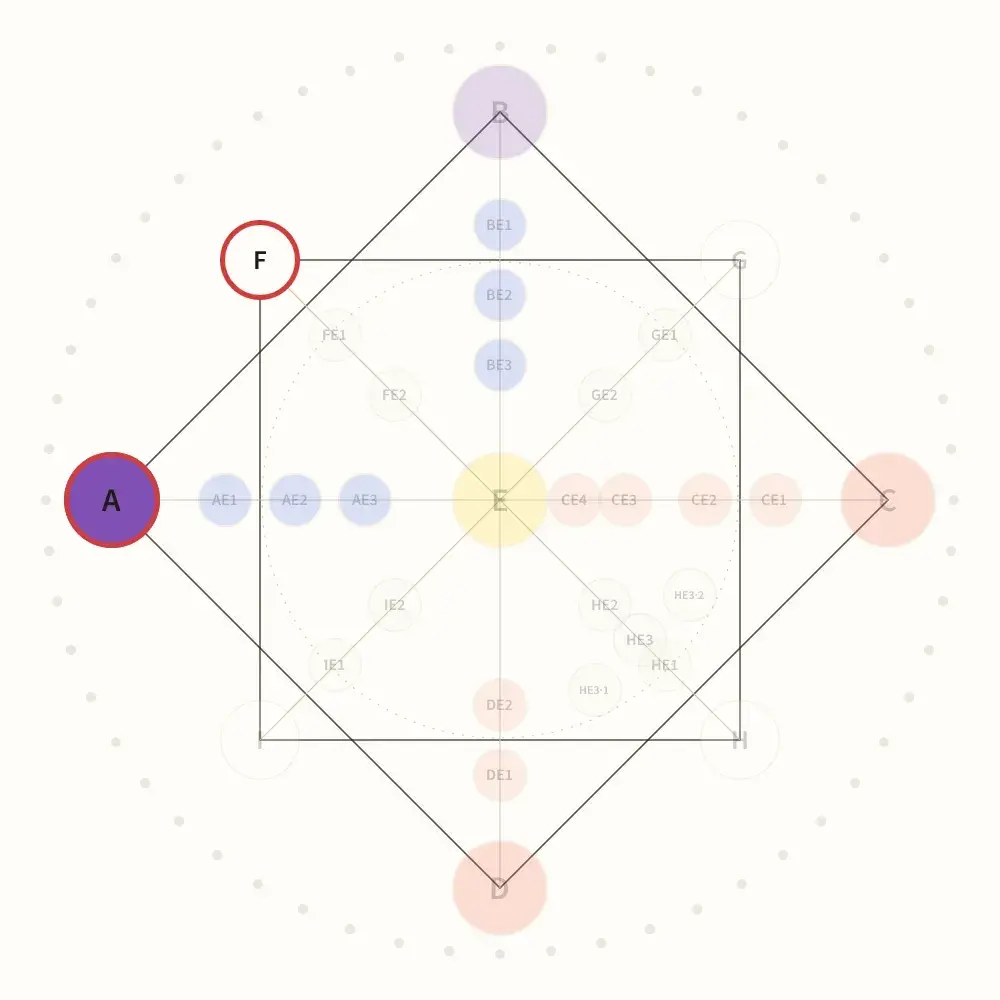
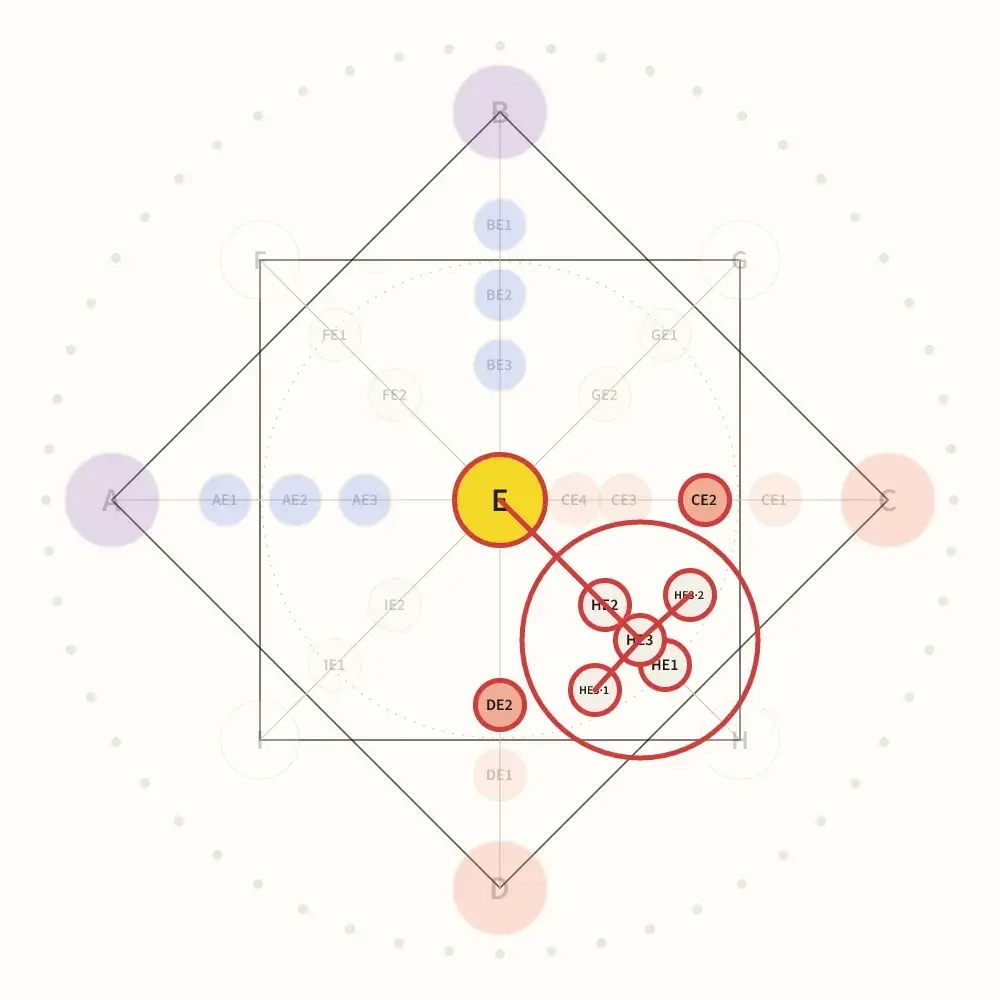
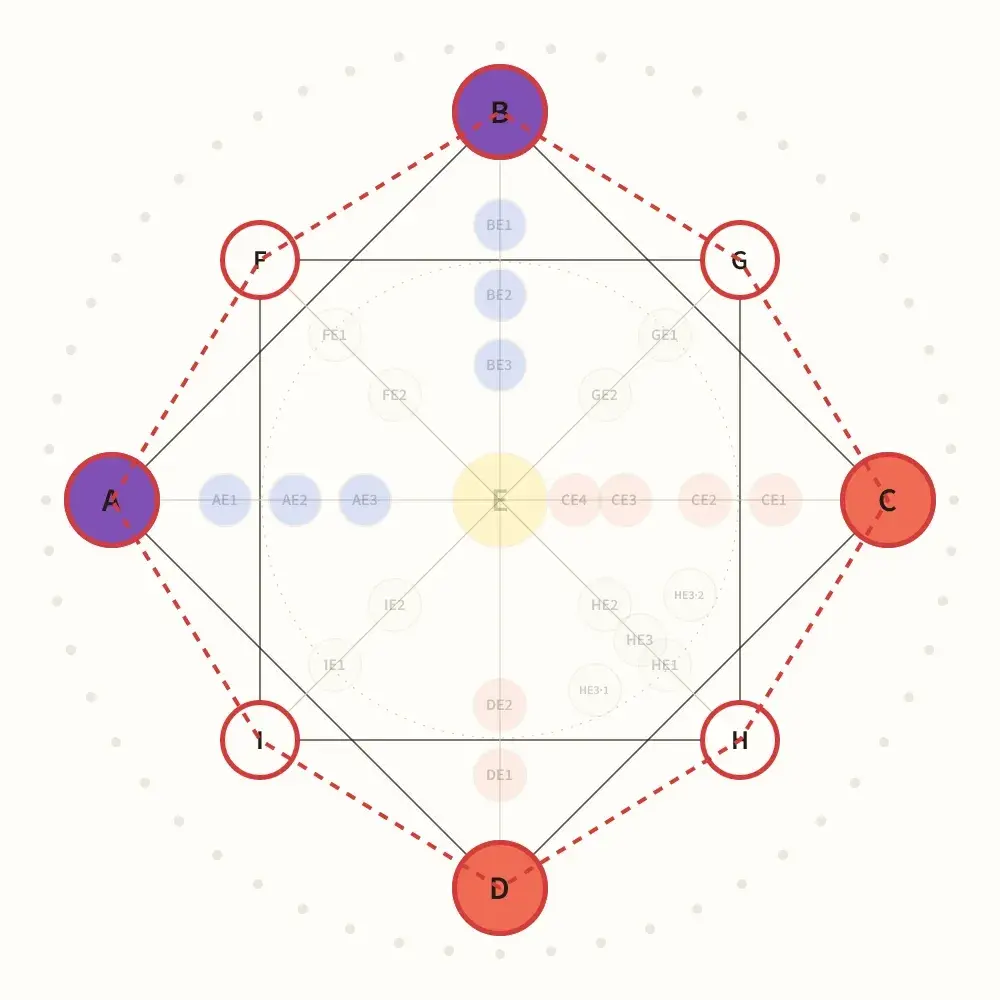
Letters are node addresses: A–D are the main vertices, E is the centre, and F–I form the family contour. Indexed nodes are subsequent calculations. AE2 is A + E; AE1 is A + AE2. The same graph is visible in ArcFlow when you inspect a formula.
The family contour begins with F = A + B, G = B + C, H = C + D and I = A + D. Its inner centre is F + G + H + I. The next branches always use values already found, so a result can be checked locally instead of recalculating the entire diagram.
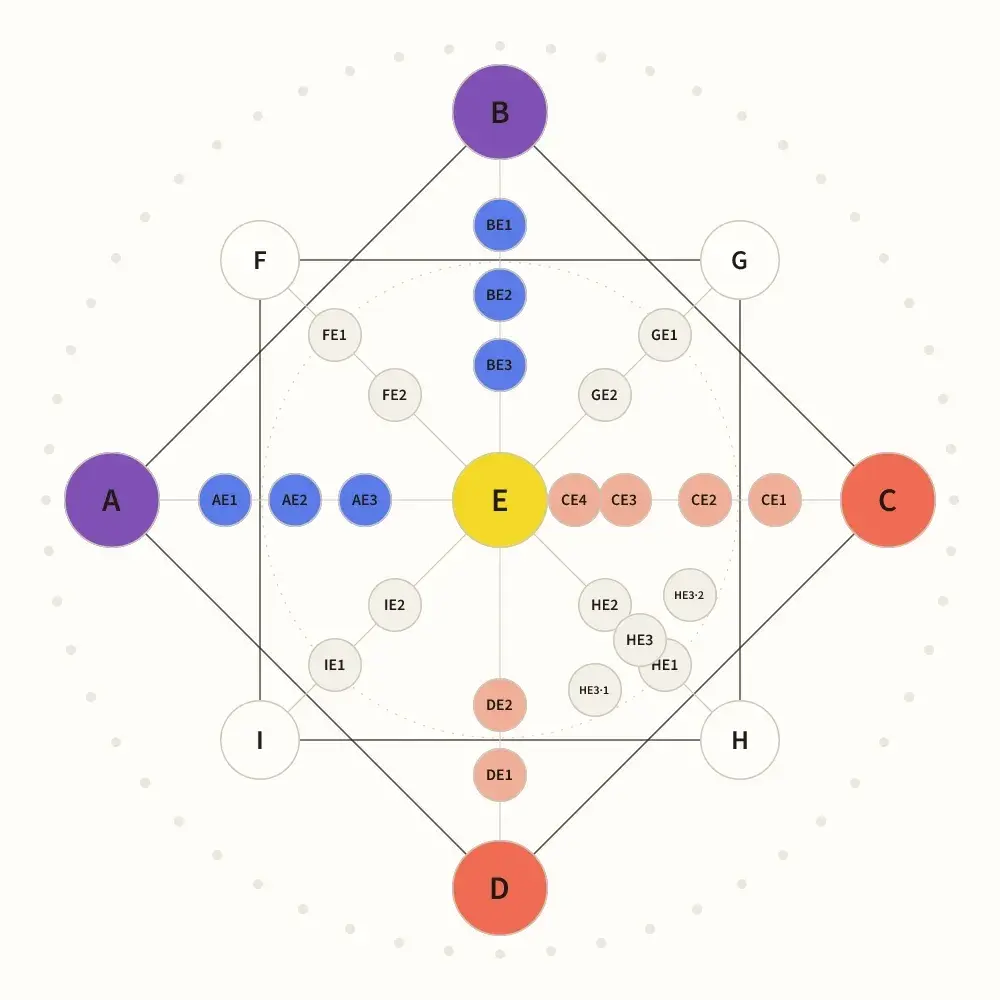
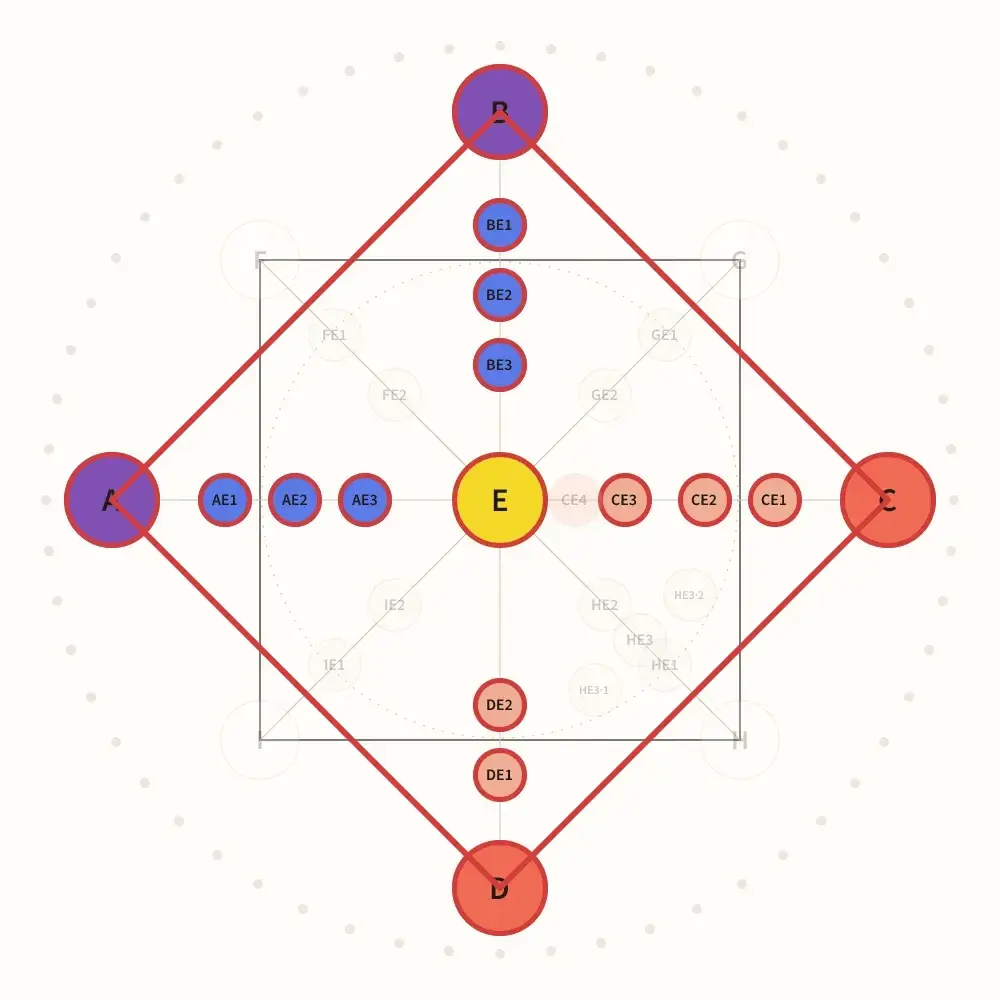
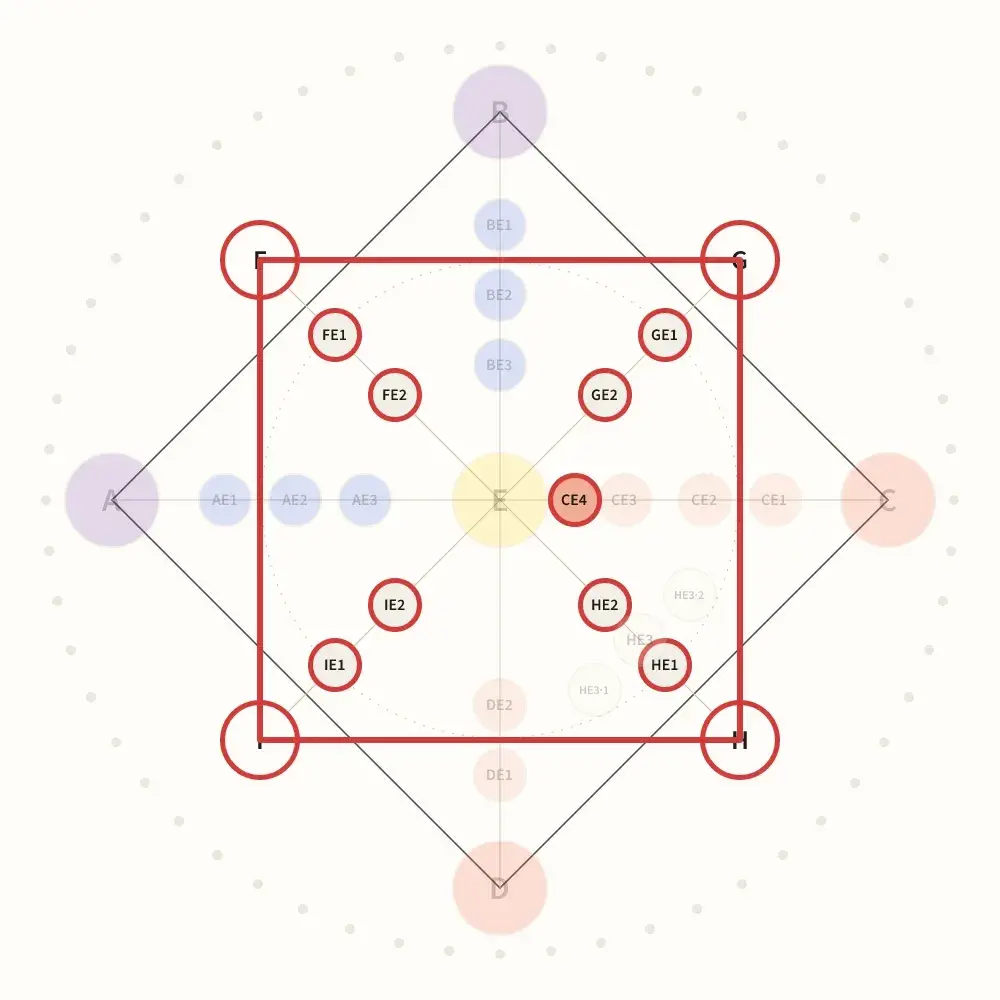
Purpose, age ring and the three-column map
ArcFlow builds two family lines, F + H and G + I; their sum is the social level. The personal level combines B + D with A + C, and the spiritual level combines personal and social results. Each operation is reduced to 1–22.
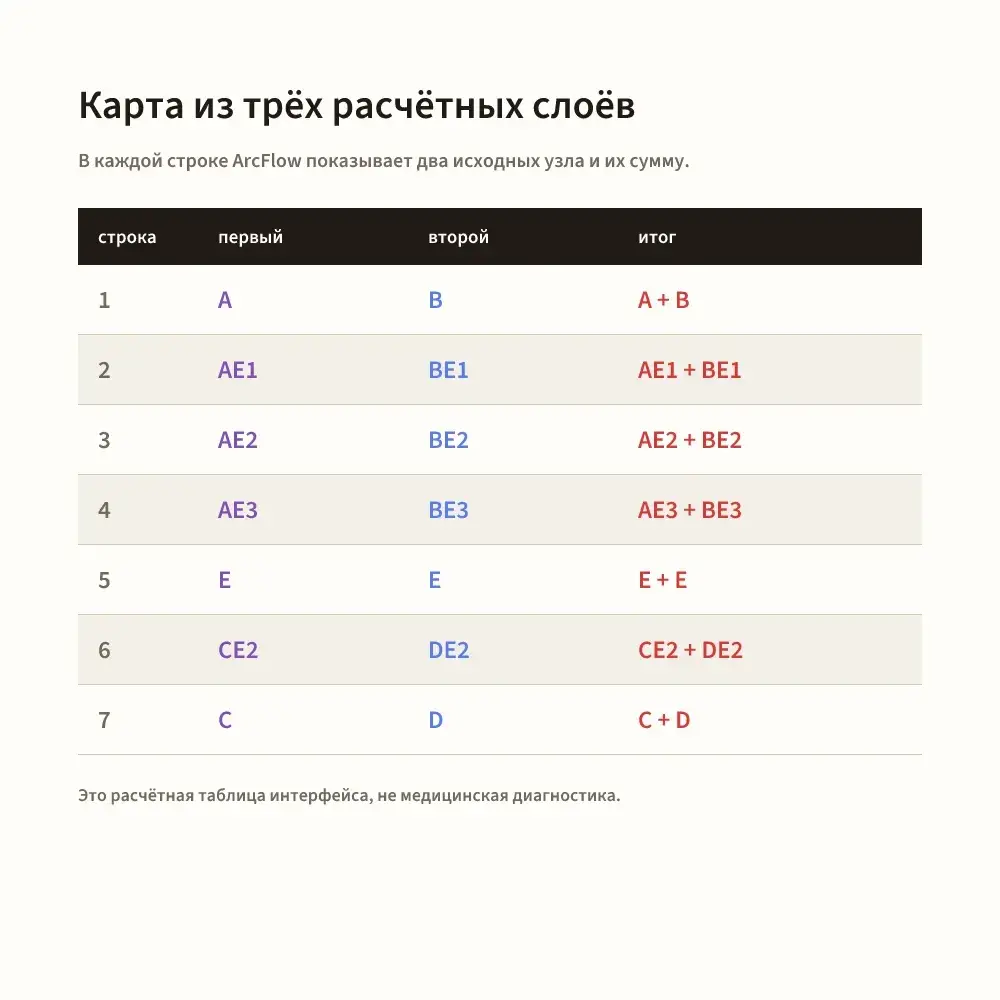
The outer ring has eight sectors and 56 intermediate points. Each sector is calculated from its two anchor vertices. The seven-row table uses three values in every row: two sources and their sum. It is a numerical reference, never a health diagnosis.
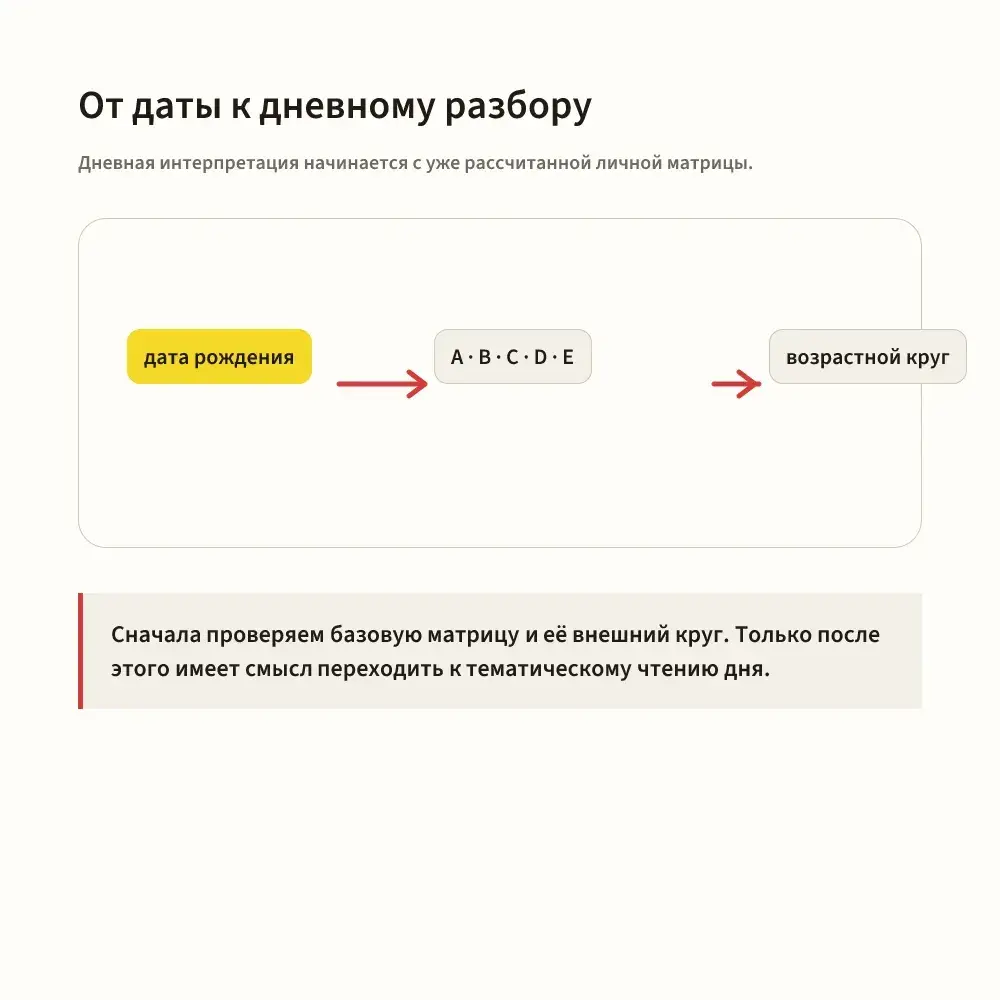
Age circle, combinations and health claims
The outer ring distributes values across age intervals using the same anchor points and intermediate sums. It can be a prompt to look back at a period and ask what changed, what you learned and which decisions repeated.
Some traditions call certain multi-node combinations programmes or karmic tails. They may be material for reflection, not an explanation for everything. A so-called health or chakra map is not a diagnostic tool either: numbers never replace a clinician, tests or mental-health support.
Common questions
No. ArcFlow performs the same operations. Hand calculation is only useful for understanding and checking a particular node.
The method works inside a 1–22 range, so the four year digits are added and reduced when needed.
No. It is an interpretive lens for recurring patterns and choices, not a reliable forecast.
See the formula behind your own diagram
Enter a birth date and ArcFlow will build the matrix and show how its nodes connect.
Calculate my Matrix