A child’s self-realisation and talents in the Destiny Matrix
A Matrix can give a parent a topic to observe: where a child gets absorbed, persists, creates, investigates or cares for others. It does not select a future career or demand that an interest become an achievement.
- Section
- Numerology Basics
- Reading
- 20 min read
- Author
- ArcFlow
- Updated
- Audio

Talent appears in a process, not a bright description
Children’s inclinations develop through a safe environment, repetition, play, mistakes and permission to change direction. A child may love a process without wanting to perform; a strong interest may appear later.
An interpretation is useful when an adult does not decide who the child is, but notices conditions: audience or quiet, team or movement, time for independent exploration.
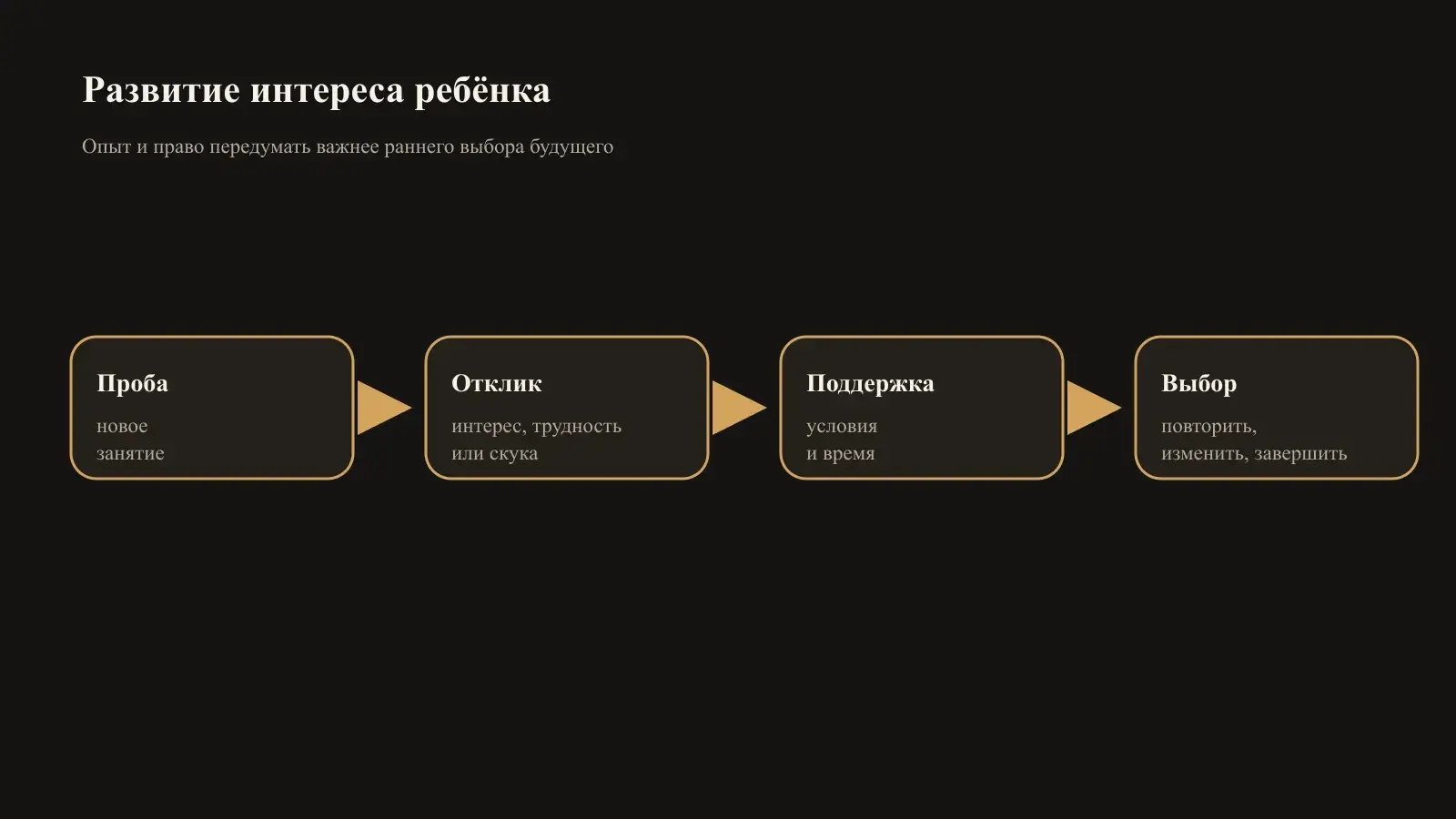
Calculate points and compare them with the child’s living interests, not a plan for their future.
Use the Matrix as a prompt for observation
How to support interest without pressure
Leave the child room to choose
Watch actions
What do they repeat independently: drawing, building, explaining, making up stories, moving or bringing people together?
Offer short trials
A club, workshop, library, sport or home project with a clear end point and permission to stop.
Separate interest from achievement
Medals, marks and speed are not the only signs of development.
Ask after the experience
What was interesting, hard or boring? Do you want to repeat, change or finish?
Protect balance
Sleep, play, friends and free time matter more than a packed schedule to unlock potential.
Calling as duty
“You have talent, so you must train and win.” That expectation can take away curiosity.
Talent as possibility
“It looks interesting to you. Let’s find a way to try it again and decide together whether to continue.”
A child’s talents: a detailed map of 22 energies
Talent is not an obligation. A child has the right to change their mind, not compete and choose a pace that does not harm their life.
Each energy below is a possible lens for interests, conditions for trying and ways to support development. Keep only what can be checked in experience; the rest does not need to be forced to fit.
1. Magician
In this area, Magician can be explored through initiative and permission to start before full readiness. In real life it is visible not in a flattering description but in a repeating scene: how a person decides, what is postponed, whom they consult and what a familiar reaction costs. Check the child’s live action, accessible trials, workload, rest and their own consent. Number 1 does not explain a situation by itself; experience, resources, age, health and circumstances also matter.
Instead of concluding “I or my child have Magician,” ask: “Where in interests, conditions for trying and ways to support development does this reaction help now, and where does it narrow choice?” Then choose one checkable step: clarify terms, name a feeling, ask for a pause, try another format or discuss it with someone who can genuinely help. There is no need to fix a personality; notice the next episode more carefully.
2. High Priestess
In this area, High Priestess can be explored through attention to nuance, silence and hidden information. In real life it is visible not in a flattering description but in a repeating scene: how a person decides, what is postponed, whom they consult and what a familiar reaction costs. Check the child’s live action, accessible trials, workload, rest and their own consent. Number 2 does not explain a situation by itself; experience, resources, age, health and circumstances also matter.
Instead of concluding “I or my child have High Priestess,” ask: “Where in interests, conditions for trying and ways to support development does this reaction help now, and where does it narrow choice?” Then choose one checkable step: clarify terms, name a feeling, ask for a pause, try another format or discuss it with someone who can genuinely help. There is no need to fix a personality; notice the next episode more carefully.
3. Empress
In this area, Empress can be explored through care for conditions, growth and material grounding. In real life it is visible not in a flattering description but in a repeating scene: how a person decides, what is postponed, whom they consult and what a familiar reaction costs. Check the child’s live action, accessible trials, workload, rest and their own consent. Number 3 does not explain a situation by itself; experience, resources, age, health and circumstances also matter.
Instead of concluding “I or my child have Empress,” ask: “Where in interests, conditions for trying and ways to support development does this reaction help now, and where does it narrow choice?” Then choose one checkable step: clarify terms, name a feeling, ask for a pause, try another format or discuss it with someone who can genuinely help. There is no need to fix a personality; notice the next episode more carefully.
4. Emperor
In this area, Emperor can be explored through structure, agreements and responsibility for boundaries. In real life it is visible not in a flattering description but in a repeating scene: how a person decides, what is postponed, whom they consult and what a familiar reaction costs. Check the child’s live action, accessible trials, workload, rest and their own consent. Number 4 does not explain a situation by itself; experience, resources, age, health and circumstances also matter.
Instead of concluding “I or my child have Emperor,” ask: “Where in interests, conditions for trying and ways to support development does this reaction help now, and where does it narrow choice?” Then choose one checkable step: clarify terms, name a feeling, ask for a pause, try another format or discuss it with someone who can genuinely help. There is no need to fix a personality; notice the next episode more carefully.
5. Hierophant
In this area, Hierophant can be explored through learning, values and passing on tested experience. In real life it is visible not in a flattering description but in a repeating scene: how a person decides, what is postponed, whom they consult and what a familiar reaction costs. Check the child’s live action, accessible trials, workload, rest and their own consent. Number 5 does not explain a situation by itself; experience, resources, age, health and circumstances also matter.
Instead of concluding “I or my child have Hierophant,” ask: “Where in interests, conditions for trying and ways to support development does this reaction help now, and where does it narrow choice?” Then choose one checkable step: clarify terms, name a feeling, ask for a pause, try another format or discuss it with someone who can genuinely help. There is no need to fix a personality; notice the next episode more carefully.
6. Lovers
In this area, Lovers can be explored through choice, connection and the ability to negotiate. In real life it is visible not in a flattering description but in a repeating scene: how a person decides, what is postponed, whom they consult and what a familiar reaction costs. Check the child’s live action, accessible trials, workload, rest and their own consent. Number 6 does not explain a situation by itself; experience, resources, age, health and circumstances also matter.
Instead of concluding “I or my child have Lovers,” ask: “Where in interests, conditions for trying and ways to support development does this reaction help now, and where does it narrow choice?” Then choose one checkable step: clarify terms, name a feeling, ask for a pause, try another format or discuss it with someone who can genuinely help. There is no need to fix a personality; notice the next episode more carefully.
7. Chariot
In this area, Chariot can be explored through pace, movement and carrying a route to completion. In real life it is visible not in a flattering description but in a repeating scene: how a person decides, what is postponed, whom they consult and what a familiar reaction costs. Check the child’s live action, accessible trials, workload, rest and their own consent. Number 7 does not explain a situation by itself; experience, resources, age, health and circumstances also matter.
Instead of concluding “I or my child have Chariot,” ask: “Where in interests, conditions for trying and ways to support development does this reaction help now, and where does it narrow choice?” Then choose one checkable step: clarify terms, name a feeling, ask for a pause, try another format or discuss it with someone who can genuinely help. There is no need to fix a personality; notice the next episode more carefully.
8. Justice
In this area, Justice can be explored through balance of interests, rules and consequences. In real life it is visible not in a flattering description but in a repeating scene: how a person decides, what is postponed, whom they consult and what a familiar reaction costs. Check the child’s live action, accessible trials, workload, rest and their own consent. Number 8 does not explain a situation by itself; experience, resources, age, health and circumstances also matter.
Instead of concluding “I or my child have Justice,” ask: “Where in interests, conditions for trying and ways to support development does this reaction help now, and where does it narrow choice?” Then choose one checkable step: clarify terms, name a feeling, ask for a pause, try another format or discuss it with someone who can genuinely help. There is no need to fix a personality; notice the next episode more carefully.
9. Hermit
In this area, Hermit can be explored through depth, research and independent concentration. In real life it is visible not in a flattering description but in a repeating scene: how a person decides, what is postponed, whom they consult and what a familiar reaction costs. Check the child’s live action, accessible trials, workload, rest and their own consent. Number 9 does not explain a situation by itself; experience, resources, age, health and circumstances also matter.
Instead of concluding “I or my child have Hermit,” ask: “Where in interests, conditions for trying and ways to support development does this reaction help now, and where does it narrow choice?” Then choose one checkable step: clarify terms, name a feeling, ask for a pause, try another format or discuss it with someone who can genuinely help. There is no need to fix a personality; notice the next episode more carefully.
10. Wheel of Fortune
In this area, Wheel of Fortune can be explored through cycles, change and readiness to rebuild a plan. In real life it is visible not in a flattering description but in a repeating scene: how a person decides, what is postponed, whom they consult and what a familiar reaction costs. Check the child’s live action, accessible trials, workload, rest and their own consent. Number 10 does not explain a situation by itself; experience, resources, age, health and circumstances also matter.
Instead of concluding “I or my child have Wheel of Fortune,” ask: “Where in interests, conditions for trying and ways to support development does this reaction help now, and where does it narrow choice?” Then choose one checkable step: clarify terms, name a feeling, ask for a pause, try another format or discuss it with someone who can genuinely help. There is no need to fix a personality; notice the next episode more carefully.
11. Strength
In this area, Strength can be explored through endurance, boundary protection and handling tension. In real life it is visible not in a flattering description but in a repeating scene: how a person decides, what is postponed, whom they consult and what a familiar reaction costs. Check the child’s live action, accessible trials, workload, rest and their own consent. Number 11 does not explain a situation by itself; experience, resources, age, health and circumstances also matter.
Instead of concluding “I or my child have Strength,” ask: “Where in interests, conditions for trying and ways to support development does this reaction help now, and where does it narrow choice?” Then choose one checkable step: clarify terms, name a feeling, ask for a pause, try another format or discuss it with someone who can genuinely help. There is no need to fix a personality; notice the next episode more carefully.
12. Hanged Man
In this area, Hanged Man can be explored through pause, a different angle and refusal of rushed conclusions. In real life it is visible not in a flattering description but in a repeating scene: how a person decides, what is postponed, whom they consult and what a familiar reaction costs. Check the child’s live action, accessible trials, workload, rest and their own consent. Number 12 does not explain a situation by itself; experience, resources, age, health and circumstances also matter.
Instead of concluding “I or my child have Hanged Man,” ask: “Where in interests, conditions for trying and ways to support development does this reaction help now, and where does it narrow choice?” Then choose one checkable step: clarify terms, name a feeling, ask for a pause, try another format or discuss it with someone who can genuinely help. There is no need to fix a personality; notice the next episode more carefully.
13. Death
In this area, Death can be explored through completion, letting go of what is over and renewal. In real life it is visible not in a flattering description but in a repeating scene: how a person decides, what is postponed, whom they consult and what a familiar reaction costs. Check the child’s live action, accessible trials, workload, rest and their own consent. Number 13 does not explain a situation by itself; experience, resources, age, health and circumstances also matter.
Instead of concluding “I or my child have Death,” ask: “Where in interests, conditions for trying and ways to support development does this reaction help now, and where does it narrow choice?” Then choose one checkable step: clarify terms, name a feeling, ask for a pause, try another format or discuss it with someone who can genuinely help. There is no need to fix a personality; notice the next episode more carefully.
14. Temperance
In this area, Temperance can be explored through rhythm, combining different needs and gradual adjustment. In real life it is visible not in a flattering description but in a repeating scene: how a person decides, what is postponed, whom they consult and what a familiar reaction costs. Check the child’s live action, accessible trials, workload, rest and their own consent. Number 14 does not explain a situation by itself; experience, resources, age, health and circumstances also matter.
Instead of concluding “I or my child have Temperance,” ask: “Where in interests, conditions for trying and ways to support development does this reaction help now, and where does it narrow choice?” Then choose one checkable step: clarify terms, name a feeling, ask for a pause, try another format or discuss it with someone who can genuinely help. There is no need to fix a personality; notice the next episode more carefully.
15. Devil
In this area, Devil can be explored through desire, ambition and honesty about material matters. In real life it is visible not in a flattering description but in a repeating scene: how a person decides, what is postponed, whom they consult and what a familiar reaction costs. Check the child’s live action, accessible trials, workload, rest and their own consent. Number 15 does not explain a situation by itself; experience, resources, age, health and circumstances also matter.
Instead of concluding “I or my child have Devil,” ask: “Where in interests, conditions for trying and ways to support development does this reaction help now, and where does it narrow choice?” Then choose one checkable step: clarify terms, name a feeling, ask for a pause, try another format or discuss it with someone who can genuinely help. There is no need to fix a personality; notice the next episode more carefully.
16. Tower
In this area, Tower can be explored through a weak point in a system and courage to rebuild it. In real life it is visible not in a flattering description but in a repeating scene: how a person decides, what is postponed, whom they consult and what a familiar reaction costs. Check the child’s live action, accessible trials, workload, rest and their own consent. Number 16 does not explain a situation by itself; experience, resources, age, health and circumstances also matter.
Instead of concluding “I or my child have Tower,” ask: “Where in interests, conditions for trying and ways to support development does this reaction help now, and where does it narrow choice?” Then choose one checkable step: clarify terms, name a feeling, ask for a pause, try another format or discuss it with someone who can genuinely help. There is no need to fix a personality; notice the next episode more carefully.
17. Star
In this area, Star can be explored through hope, a distant direction and making results visible. In real life it is visible not in a flattering description but in a repeating scene: how a person decides, what is postponed, whom they consult and what a familiar reaction costs. Check the child’s live action, accessible trials, workload, rest and their own consent. Number 17 does not explain a situation by itself; experience, resources, age, health and circumstances also matter.
Instead of concluding “I or my child have Star,” ask: “Where in interests, conditions for trying and ways to support development does this reaction help now, and where does it narrow choice?” Then choose one checkable step: clarify terms, name a feeling, ask for a pause, try another format or discuss it with someone who can genuinely help. There is no need to fix a personality; notice the next episode more carefully.
18. Moon
In this area, Moon can be explored through sensitivity to atmosphere and checking anxious guesses. In real life it is visible not in a flattering description but in a repeating scene: how a person decides, what is postponed, whom they consult and what a familiar reaction costs. Check the child’s live action, accessible trials, workload, rest and their own consent. Number 18 does not explain a situation by itself; experience, resources, age, health and circumstances also matter.
Instead of concluding “I or my child have Moon,” ask: “Where in interests, conditions for trying and ways to support development does this reaction help now, and where does it narrow choice?” Then choose one checkable step: clarify terms, name a feeling, ask for a pause, try another format or discuss it with someone who can genuinely help. There is no need to fix a personality; notice the next episode more carefully.
19. Sun
In this area, Sun can be explored through warmth, visibility and permission to take space. In real life it is visible not in a flattering description but in a repeating scene: how a person decides, what is postponed, whom they consult and what a familiar reaction costs. Check the child’s live action, accessible trials, workload, rest and their own consent. Number 19 does not explain a situation by itself; experience, resources, age, health and circumstances also matter.
Instead of concluding “I or my child have Sun,” ask: “Where in interests, conditions for trying and ways to support development does this reaction help now, and where does it narrow choice?” Then choose one checkable step: clarify terms, name a feeling, ask for a pause, try another format or discuss it with someone who can genuinely help. There is no need to fix a personality; notice the next episode more carefully.
20. Judgement
In this area, Judgement can be explored through family history, responsibility and revising old verdicts. In real life it is visible not in a flattering description but in a repeating scene: how a person decides, what is postponed, whom they consult and what a familiar reaction costs. Check the child’s live action, accessible trials, workload, rest and their own consent. Number 20 does not explain a situation by itself; experience, resources, age, health and circumstances also matter.
Instead of concluding “I or my child have Judgement,” ask: “Where in interests, conditions for trying and ways to support development does this reaction help now, and where does it narrow choice?” Then choose one checkable step: clarify terms, name a feeling, ask for a pause, try another format or discuss it with someone who can genuinely help. There is no need to fix a personality; notice the next episode more carefully.
21. World
In this area, World can be explored through a whole picture, different cultures and completing cycles. In real life it is visible not in a flattering description but in a repeating scene: how a person decides, what is postponed, whom they consult and what a familiar reaction costs. Check the child’s live action, accessible trials, workload, rest and their own consent. Number 21 does not explain a situation by itself; experience, resources, age, health and circumstances also matter.
Instead of concluding “I or my child have World,” ask: “Where in interests, conditions for trying and ways to support development does this reaction help now, and where does it narrow choice?” Then choose one checkable step: clarify terms, name a feeling, ask for a pause, try another format or discuss it with someone who can genuinely help. There is no need to fix a personality; notice the next episode more carefully.
22. Fool
In this area, Fool can be explored through experiment, curiosity and permission to learn through mistakes. In real life it is visible not in a flattering description but in a repeating scene: how a person decides, what is postponed, whom they consult and what a familiar reaction costs. Check the child’s live action, accessible trials, workload, rest and their own consent. Number 22 does not explain a situation by itself; experience, resources, age, health and circumstances also matter.
Instead of concluding “I or my child have Fool,” ask: “Where in interests, conditions for trying and ways to support development does this reaction help now, and where does it narrow choice?” Then choose one checkable step: clarify terms, name a feeling, ask for a pause, try another format or discuss it with someone who can genuinely help. There is no need to fix a personality; notice the next episode more carefully.
Arcanas for discussing different kinds of interest

1st Arcana The Magician in the Matrix of Destiny: How to Become the Creator of Your Reality
Decoding the energy of the 1st Arcana — The Magician. Discover how to use your creative power, avoid the pitfalls of pride, and build the life you want.

The 5th Arcana Hierophant in the Matrix of Destiny: Traditions, Knowledge, and Family
Decoding the fifth energy in the Matrix of Destiny: how innate wisdom, a drive for order, and the role of a mentor shape your destiny, relationships, and career path.

The 17th Arcana Star in the Matrix of Destiny: Meaning, Talents, and Stepping Out of the Shadows
You carry a unique gift. How to stop hiding your light and start monetizing your exceptionality. A guide to the 17th Arcana.

The 19th Arcana The Sun in the Matrix of Destiny: How to Manage the Energy of Prosperity Without Burning Out Yourself and Your Loved Ones
The brightest and most financially abundant arcana in the Matrix. Your energy is triumph, leadership, and joy of life. Learn how to transform from a 'burning sun' into one that gently warms and leads others.
Common questions
Only as a source of ideas. Base the choice on the child’s interest, access, safety, a trial session and their own yes or no.
That is not necessarily a problem. Ask about format, workload, teacher, group or changing interest.
No. Children benefit from trying different things. Narrow specialisation makes sense when the child consistently wants it and the routine is safe.
No. Difficulties need a conversation with school and, if needed, assessment by professionals, not a symbolic explanation.
Let the result offer questions for observation; choose the next step together with the child.