Karmic tail “Lonely Woman” (3/12/9)
The traditional name is blunt. It does not predict a life without a partner, and it does not grade anyone’s life by relationship status. Here it is a lens for talking about closeness, waiting for love, and building a life at your own pace.
- Section
- Karmic Tails
- Reading
- 15 min read
- Author
- ArcFlow
- Updated
- Audio
What 3-12-9 can help you notice
The 3-12-9 combination is often read through three images. Three speaks to care, embodied needs, and the ability to make something grow. Twelve points to pause, waiting, and the risk of sacrificing yourself for hope. Nine relates to solitude, reflection, and inner honesty. Together they are not a biography or a forecast. They can help examine a familiar pattern: the wish to be needed becomes so strong that your plans, voice, friendships, and ordinary pleasures are put on hold.
The word “woman” belongs to an older naming system. The topic is not limited by gender, nor does it require anyone to fit a conventional role. Relationship status has historically been judged more harshly for women, which is why the name survived. Keep it as a navigation label if it is useful, but read the page more broadly: it is for anyone who has heard the painful thought, “Something must be wrong with me because I am alone.” That thought deserves compassion, not confirmation.
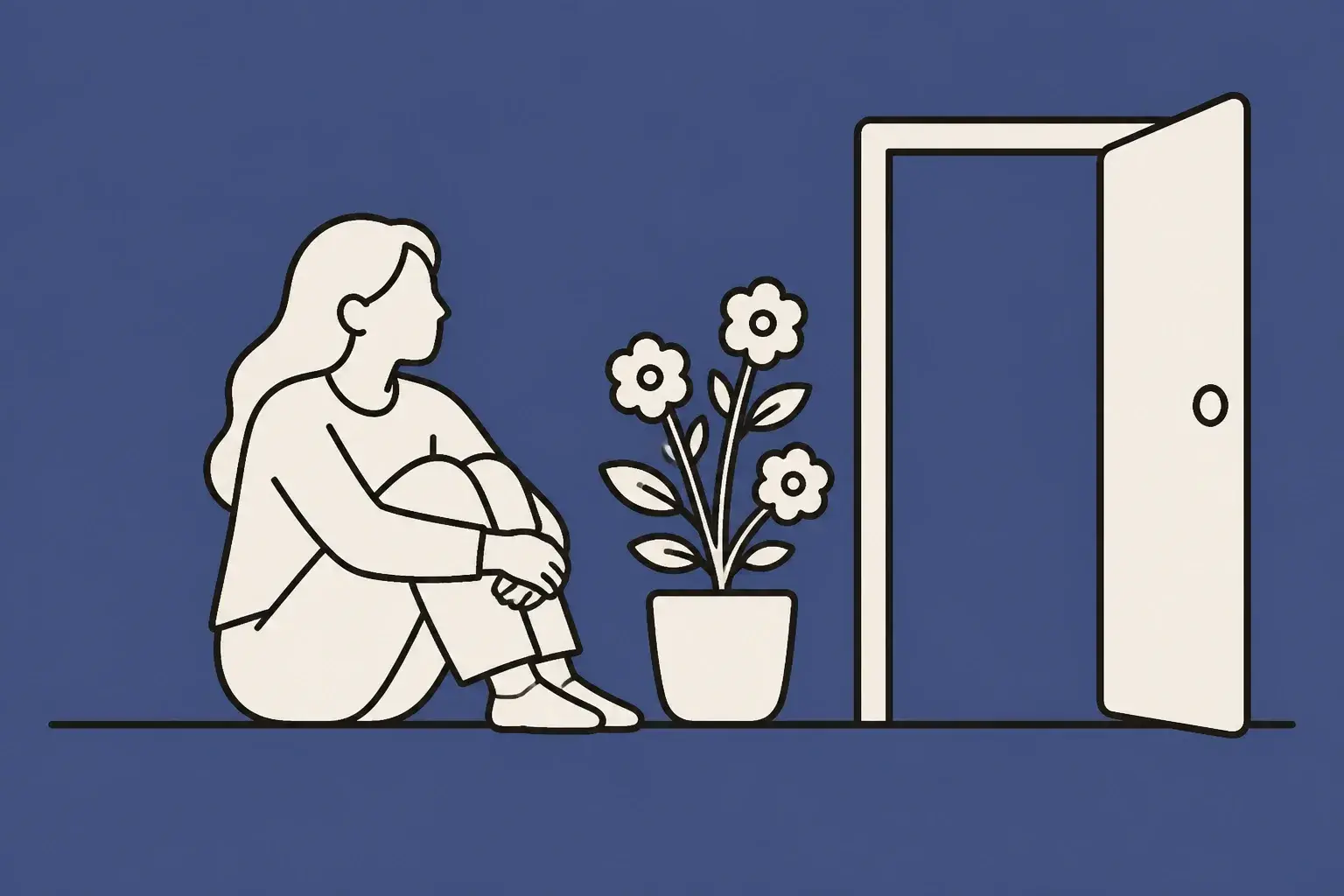
Solitude and loneliness are different experiences. Loneliness can hurt when there is no safe person to share something important with. Solitude can be chosen for sleep, recovery, thought, or pleasure. Many people feel both at once: they enjoy an evening by themselves and still miss touch, conversation, or shared plans. You do not need to declare one state good and the other bad. A more useful question is: what do I miss today, and what kind of contact would be manageable?
With 3-12-9, waiting can become a trap. Life is imagined to begin after a meeting, reconciliation, marriage, or someone else’s approval. A home remains temporary, a trip is postponed, invitations are declined, and personal interests are treated as secondary. It can look like devotion to a dream, yet the present day is left uninhabited. A kinder starting point is not an order to “love yourself.” It is a small return to reality: what matters this week, who can I call, and what can I make more livable now?
The opposite extreme is turning independence into armour. After disappointment, it may feel safer to need nobody, ask for nothing, or never invite first. This strategy may once have protected you from rejection. Over time it blocks both risk and reciprocity. The task is not to become open with everyone. It is to practice measured vulnerability: make a small request, notice the response, and choose people whose respect does not disappear when you say no.
A destiny-matrix reading is not psychological diagnosis and cannot explain a life with three numbers. Family history, culture, money, health, relocation, identity, and painful breakups all shape relationships. If sadness lasts for weeks, sleep or energy disappears, or isolation feels unbearable, a therapist or doctor can offer steadier support. Seeking help is not failure; it is a way to avoid carrying a heavy state alone.
How the pattern can appear in life
In a difficult pattern, closeness becomes an exam. A late reply is read as a verdict, a cancelled date as total rejection, and every message is searched for proof of love. Fear of losing the connection can lead to accepting an uncomfortable arrangement, cancelling your own plans, tolerating disrespect, or trying to become indispensable. Resentment then grows: so much was given, yet safety never arrived.
Another pattern is keeping a relationship on standby. Someone may wait for an unavailable person, sustain an undefined connection for years, return after a clear refusal, or repeatedly choose people with no emotional room. This is not a reason for blame. Unavailability can feel safer than actual intimacy because it preserves hope while avoiding the practical work of being known, negotiating time, money, needs, and boundaries.
Sometimes the theme appears outside romance, through disappearing from friendship. A person expects friends to sense their fatigue, avoids “imposing,” delays every reply, and gradually loses the thread. Silence can become a test: “If I mattered, they would find me.” People rarely read silence accurately. A small direct invitation is usually more honest than testing love through absence.
Social pressure adds another layer. Relatives ask about marriage, colleagues assume a single person can always work late, and social feeds display edited snapshots of couples. This can be exhausting. You do not have to win every conversation. A short boundary is enough: “I do not discuss my private life at dinner,” or “Living alone does not make my time available.” Such sentences return authorship of your life to you.
The related “Overseer” tail explores how the wish to predict everything can hide fear of rejection. Monitoring messages, calendars, or the future does not make a relationship safer; it usually takes the air out of it.
In difficulty: waiting and fear
In a difficult pattern, closeness becomes an exam. A late reply is read as a verdict, a cancelled date as total rejection, and every message is searched for proof of love. Fear of losing the connection can lead to accepting an uncomfortable arrangement, cancelling your own plans, tolerating disrespect, or trying to become indispensable. Resentment then grows: so much was given, yet safety never arrived.
Another pattern is keeping a relationship on standby. Someone may wait for an unavailable person, sustain an undefined connection for years, return after a clear refusal, or repeatedly choose people with no emotional room. This is not a reason for blame. Unavailability can feel safer than actual intimacy because it preserves hope while avoiding the practical work of being known, negotiating time, money, needs, and boundaries.
Sometimes the theme appears outside romance, through disappearing from friendship. A person expects friends to sense their fatigue, avoids “imposing,” delays every reply, and gradually loses the thread. Silence can become a test: “If I mattered, they would find me.” People rarely read silence accurately. A small direct invitation is usually more honest than testing love through absence.
In resource: choice and connection
In its resourceful form, Three helps create a lived environment rather than a waiting room: a home you want to return to, friendships with a rhythm, work with a shape. Care is directed outward and inward. You may cook for a friend and still protect your sleep from someone else’s urgency. Self-worth appears in practical choices, not a slogan.
Twelve, read maturely, is the ability to hold a pause without punishing yourself. Not every silence requires another message, and not every attraction needs to become a relationship at once. A pause tests compatibility: are your boundaries respected, do words match actions, is there room for your separate life? Patience is valuable until it becomes consent to endless uncertainty.
Nine helps distinguish quiet from isolation. Time alone becomes a resource when it includes choice, interest, and a way back to people. It might be a walk without a phone, a class, reading, exercise, making something with your hands, or volunteering. The point is not to fill every hour. It is to experience that you can be alone without disappearing from your own life.
Resource: connection without erasing yourself
In its resourceful form, Three helps create a lived environment rather than a waiting room: a home you want to return to, friendships with a rhythm, work with a shape. Care is directed outward and inward. You may cook for a friend and still protect your sleep from someone else’s urgency. Self-worth appears in practical choices, not a slogan.
Twelve, read maturely, is the ability to hold a pause without punishing yourself. Not every silence requires another message, and not every attraction needs to become a relationship at once. A pause tests compatibility: are your boundaries respected, do words match actions, is there room for your separate life? Patience is valuable until it becomes consent to endless uncertainty.
Nine helps distinguish quiet from isolation. Time alone becomes a resource when it includes choice, interest, and a way back to people. It might be a walk without a phone, a class, reading, exercise, making something with your hands, or volunteering. The point is not to fill every hour. It is to experience that you can be alone without disappearing from your own life.
The Empress archetype frames care as permission to take up space, enjoy life, and grow what is yours. It matters when waiting makes you economise on yourself, live for “later,” or serve only other people’s needs. Pleasure does not need to be earned by having the right relationship status.
Closeness can be romantic, friendly, familial, professional, or neighbourly. A partnership may be precious, but it does not need to carry friendship, rest, support, curiosity, and proof of worth all by itself. A varied circle of connection means no one person has to become the sole rescue from emptiness.
A sensitivity to another person’s mood can become a strength when it serves clear contact rather than guessing or rescuing. Try: “I noticed we have spoken less. Our friendship matters to me; would Saturday work for coffee?” Specificity reduces unnecessary drama and gives the other person room to answer honestly.
In a difficult pattern, closeness becomes an exam. A late reply is read as a verdict, a cancelled date as total rejection, and every message is searched for proof of love. Fear of losing the connection can lead to accepting an uncomfortable arrangement, cancelling your own plans, tolerating disrespect, or trying to become indispensable. Resentment then grows: so much was given, yet safety never arrived.
In its resourceful form, Three helps create a lived environment rather than a waiting room: a home you want to return to, friendships with a rhythm, work with a shape. Care is directed outward and inward. You may cook for a friend and still protect your sleep from someone else’s urgency. Self-worth appears in practical choices, not a slogan.
Another pattern is keeping a relationship on standby. Someone may wait for an unavailable person, sustain an undefined connection for years, return after a clear refusal, or repeatedly choose people with no emotional room. This is not a reason for blame. Unavailability can feel safer than actual intimacy because it preserves hope while avoiding the practical work of being known, negotiating time, money, needs, and boundaries.
Twelve, read maturely, is the ability to hold a pause without punishing yourself. Not every silence requires another message, and not every attraction needs to become a relationship at once. A pause tests compatibility: are your boundaries respected, do words match actions, is there room for your separate life? Patience is valuable until it becomes consent to endless uncertainty.
Sometimes the theme appears outside romance, through disappearing from friendship. A person expects friends to sense their fatigue, avoids “imposing,” delays every reply, and gradually loses the thread. Silence can become a test: “If I mattered, they would find me.” People rarely read silence accurately. A small direct invitation is usually more honest than testing love through absence.
Nine helps distinguish quiet from isolation. Time alone becomes a resource when it includes choice, interest, and a way back to people. It might be a walk without a phone, a class, reading, exercise, making something with your hands, or volunteering. The point is not to fill every hour. It is to experience that you can be alone without disappearing from your own life.
A practice for the next month
Start by listing contacts rather than relationship status. Write down people around whom you can be yourself and sort them into three circles: someone to message today, someone to reconnect with, and places where you could meet new people. Do not make “find a partner” the goal. Choose one manageable gesture: send a voice note, suggest coffee, or join an interest group.
Review what you expect from a partner. Which needs actually belong to friendship, rest, support in illness, sexuality, shared home life, or financial security? For each need, look for at least one source that does not depend on one person. This does not diminish partnership. It lets a relationship breathe because you arrive for mutuality rather than rescue.
Practice a clear request. Instead of “You are probably busy,” say: “I would like to talk for twenty minutes today or tomorrow; do you have a window?” Instead of testing through silence: “I felt hurt when our plan was cancelled without another date.” A request cannot guarantee agreement, but it gives real information about someone’s capacity to show up.
Make your home and calendar places where you are present. Pick one regular anchor for the next month: phone-free breakfast, Wednesday dance class, a call with a sibling, walking a neighbour’s dog, or a book club. Consistency matters more than scale. It restores the sense that life has not paused while you wait for an ideal story.
If you are dating, notice not only intensity but the quality of contact after a conversation. Do you feel calmer or more anxious? Can you decline a meeting without punishment? Is there interest in your work, friends, and boundaries? These questions do not turn dating into an interview. They help distinguish uncertainty from depth.
Prepare support for family conversations. Choose one sentence and repeat it without defending it: “I will tell you when I want to,” “That question does not work for me,” or “Let us change the subject.” If a direct answer is unsafe, shorten such meetings or find an ally at the table. Your private life is not a family report.
Use ArcFlow’s Destiny Matrix as an observation prompt, not a verdict. Note situations that make you want to vanish, hold on to someone, or cancel yourself. After a few weeks, the notes often make real needs and workable forms of support easier to see.
Map your circle of closeness
Map your circle of closeness
Start by listing contacts rather than relationship status. Write down people around whom you can be yourself and sort them into three circles: someone to message today, someone to reconnect with, and places where you could meet new people. Do not make “find a partner” the goal. Choose one manageable gesture: send a voice note, suggest coffee, or join an interest group.
Review what you expect from a partner. Which needs actually belong to friendship, rest, support in illness, sexuality, shared home life, or financial security? For each need, look for at least one source that does not depend on one person. This does not diminish partnership. It lets a relationship breathe because you arrive for mutuality rather than rescue.
Resource: connection without erasing yourself
Practice a clear request. Instead of “You are probably busy,” say: “I would like to talk for twenty minutes today or tomorrow; do you have a window?” Instead of testing through silence: “I felt hurt when our plan was cancelled without another date.” A request cannot guarantee agreement, but it gives real information about someone’s capacity to show up.
Make your home and calendar places where you are present. Pick one regular anchor for the next month: phone-free breakfast, Wednesday dance class, a call with a sibling, walking a neighbour’s dog, or a book club. Consistency matters more than scale. It restores the sense that life has not paused while you wait for an ideal story.
A practice for the next month
If you are dating, notice not only intensity but the quality of contact after a conversation. Do you feel calmer or more anxious? Can you decline a meeting without punishment? Is there interest in your work, friends, and boundaries? These questions do not turn dating into an interview. They help distinguish uncertainty from depth.
Prepare support for family conversations. Choose one sentence and repeat it without defending it: “I will tell you when I want to,” “That question does not work for me,” or “Let us change the subject.” If a direct answer is unsafe, shorten such meetings or find an ally at the table. Your private life is not a family report.
Common questions
No. These numbers do not predict relationship status. They offer language for examining habits around closeness and solitude.
No. Start with safe contacts, interests, and clear boundaries. Partnership is a possible choice, not proof of wellbeing.
When loneliness comes with persistent low mood, anxiety, lost sleep, energy, or interest in life. Professional support is kinder than self-criticism.
Explore your patterns gently
Use ArcFlow’s Destiny Matrix as an observation prompt, not a verdict. Note situations that make you want to vanish, hold on to someone, or cancel yourself. After a few weeks, the notes often make real needs and workable forms of support easier to see.
ArcFlow