The 12th Arcana, The Hanged Man: Your Gift Is Seeing the World Differently
The energy that turns strange ideas into brilliant breakthroughs, and compassion into a healing force. If you're tired of carrying other people's problems, this guide is for you.
- Section
- Major Arcana
- Reading
- 19 min read
- Author
- Alena Baranenkova
- Updated
- Audio
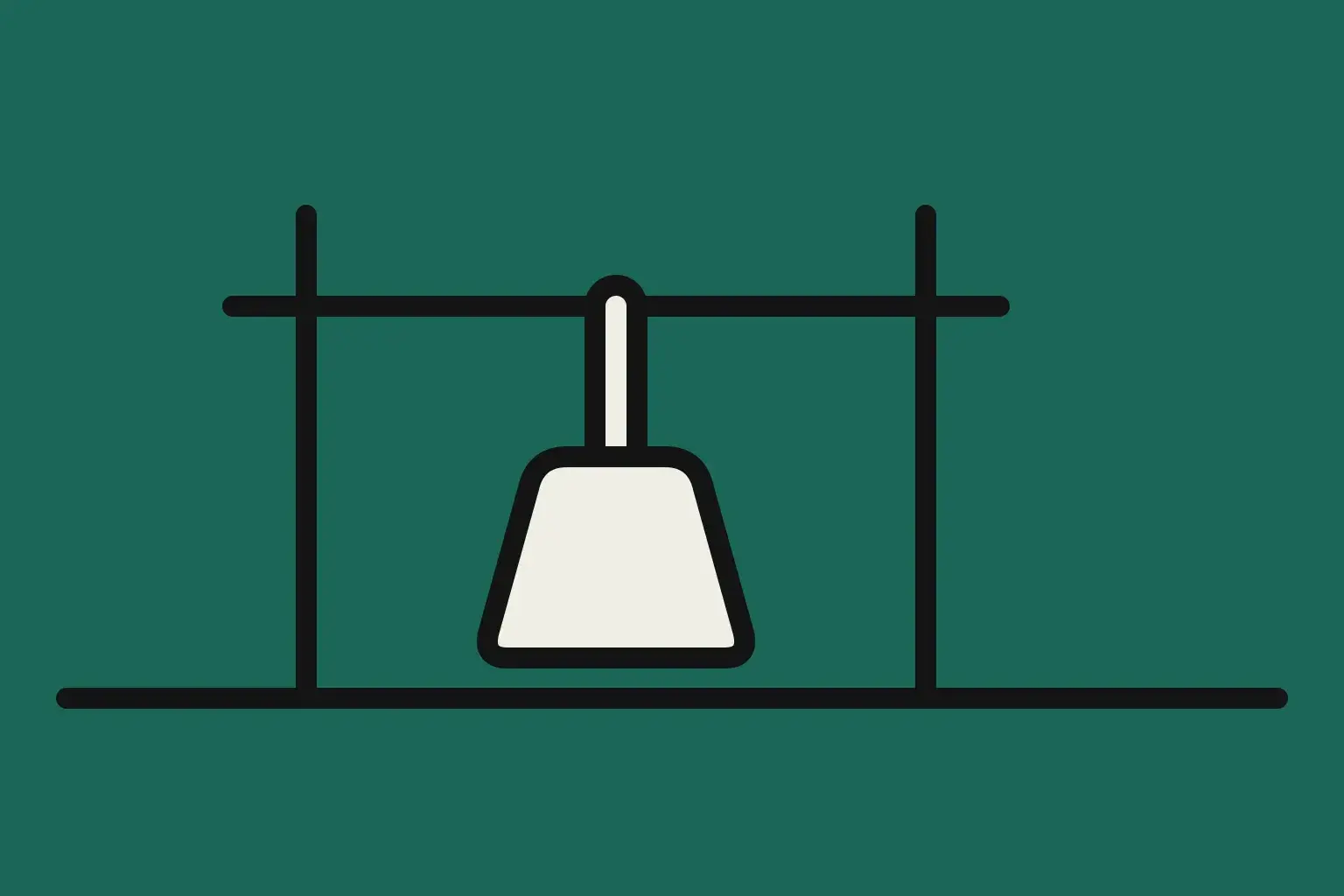
Sometimes you need to allow yourself to hang in uncertainty to see the world from a new height.
Personal Qualities and Character
Those with the 12th Arcana don't view the world through a standard window, but through a kaleidoscope—where familiar things arrange themselves into unexpected patterns. Your thoughts might seem a bit 'otherworldly' to others, but this unconventional perspective is precisely your superpower.
You feel another person's pain almost physically. People are drawn to you for advice, support, a simple 'what should I do?'. And herein lies the crucial choice: will you become a wise guide who helps without losing yourself, or will you turn into an exhausted 'shoulder to cry on' where everyone hangs their problems?
Your duality is a constant oscillation between brilliant insight and a feeling of helpless suspension. Everything depends on one thing—how firmly you hold the boundary between your inner world and the external noise.
A different perspective and innovation. You generate unique ideas and find creative solutions to routine tasks.
Passive victimhood. The rescuer syndrome kicks in: you ignore your own needs for the sake of others' imagined comfort.
Conscious compassion. You help from the heart, but always ensure your own resource 'kettle' doesn't run empty.
Depletion and resentment. Living with the bitter feeling of 'I do everything for them, and they don't appreciate it'. Accumulating grievances towards the world.
True service. You have a mission, and sacrifice is a conscious choice (e.g., giving up something harmful for a greater goal).
A negative magnet. You attract toxic people and situations where you are manipulated and used.
Karmic Baggage and Soul Evolution
Your path is not a speedway, but an exciting, sometimes confusing labyrinth. Every turn is a lesson, and a dead end is a chance to reconsider the map. The karma of the 12th Arcana is often tied to the theme of an unrealized gift and blind self-sacrifice.
In the past, you might have been the sage whose advice no one listened to, or the monk who served others so diligently that they forgot their own soul. Now it's time for a different balance: giving without draining yourself, and valuing your unique perspective.
Soul evolution for the 12th Arcana is a journey from feeling 'misunderstood' to realizing 'my understanding of the world is a gift.' To walk this path, you need to complete several key tasks, laid out over time.
Stages of Your Evolution
Tasks from a Past Life
The karmic lesson is to learn to value your work and protect your boundaries. Perhaps in the past, you 'buried your talent' out of fear of rejection, or lived a life completely dissolved in the needs of family, community, or a cause. Now the Universe demands an equal exchange: for your help, time, and expertise, the world should thank you—with respect, money, recognition. Conscious sacrifice (e.g., time for study) leads to great results, while blind giving leads to depletion.
Soul's Tasks Up to Age 40
This is the period of forming your philosophical foundation. Main goals: accept your uniqueness, stop playing the role of the 'convenient person,' and find a cause that becomes a channel for your service to the world. It's important to learn to take breaks before burning out, and definitely give an outlet to your creativity—through hobbies, art, or unconventional approaches at work.
The Main Work in This Life
Learn compassion without losing yourself. This means—getting rid of low self-esteem and deeply internalizing: you are worthy of love and prosperity simply because you exist. Your value is not measured by the number of people you've saved. The key skill is to distinguish true help from participating in someone else's dysfunction and having the courage to say 'no' when a request violates your boundaries.
Purpose Vectors and Family Patterns
Your presence in the world is not accidental. You come with specific tasks always related to transformation through love, help, and shifting perspectives. But to fulfill them, you need to clearly understand where your energy is directed and what family stories might be holding you back.
Social and Personal Purpose
You are meant to become a beacon—one who shows others a different path. Your unconventional thinking will one day be your main asset. Let go of relationships that drain you and focus on creating something new. This could be a psychological practice based on your unique method, a tech startup with a humanistic idea, or art that makes people reconsider their beliefs. Your social role is that of an innovator and a healer of souls.
Spiritual Mission
At a higher level, your task is to attain true wisdom through service, not servitude. You are here to show by your own example that one can help from a state of inner fullness, not emptiness. Your spiritual mission is to teach people to forgive, to find light in darkness, and, most importantly, to view any situation from a new, non-obvious angle. You are a guide to a different vision.
But the path to this mission can be blocked by a family pattern. In your family history, there might have been patterns of aimless existence, addictions (as an escape from reality), or painful relationships built on sacrifice and guilt. You are the one meant to heal this pattern.
How to Heal the Family Pattern
Become Aware of the Pattern
Analyze the stories of your grandparents, parents. Where in your lineage were there situations of chronic victimhood, where one gave everything and the other only took? Or, conversely, stories of emptiness and escaping responsibility? Acknowledging this is the first step towards change.
Learn to Share from Abundance
Stop helping out of guilt or obligation. Before giving something (money, time, advice), ask yourself: 'Do I have enough of this resource right now? Am I doing this with joy and ease?' If the answer is 'no'—it's a sign you're replaying the old pattern.
Establish New Boundaries in the Family
This is the hardest part. Start small: don't drop everything when a relative calls with complaints. Explain that you have your own life and suggest a specific time to talk. You are not becoming a bad person—you are becoming an adult who respects both your own time and the time of others.
Innate Talents and the Point of Harmony
Nature has generously endowed you with tools that can lead to incredible success if you learn to use them consciously. Your mind works non-linearly—you see connections where others see only disparate facts. This is the gift of a creative genius.
Your empathy is not a weakness, but a highly precise instrument.
You read a person's mood by their tone, glance, pause. In business, this helps with subtle negotiations; in creativity, it allows you to create piercing works; in helping others, it lets you understand the core of a problem without lengthy questioning.
And you also have the ability to focus with almost monastic discipline when it comes to a goal that is truly important to you. You are capable of giving up immediate pleasures for a global result—as long as that result is filled with deep meaning for you.
Love and Relationships
In love, you seek not just a partner, but a soulmate. Appearance, status, age—all this takes a back seat to the feeling of an invisible, powerful connection. You might meet in the most unexpected place: at a volunteer event, in a strange workshop, or during a trip to a power spot.
The main trap at the start is confusing love with pity. Your inner rescuer might stir at the sight of a person with a 'difficult fate.' And before you know it, you're not building a relationship, but taking on a mission to rehabilitate them. A healthy relationship for you is a union of two whole people, not a 'doctor and patient' dynamic.
Readiness for a Relationship
You often subconsciously look for someone to take care of. Meetings happen in atypical circumstances, as if fate itself is tossing you a 'rescue project.' The key moment is to ask yourself: 'What attracts me to this person—their strength and light, or their wounds and weaknesses?' If it's the latter—that's a red flag.
The Nature of Healthy Relationships
This is a union where both are ready to make compromises, but not at the cost of self-destruction. You treat each other's weaknesses with care, support even the craziest ideas, and engage in joint creation—whether it's a shared business, a creative project, or simply raising children in an atmosphere of acceptance. You give each other space for solitude, understanding that it's not distancing, but a necessity for your sensitive nature.
Scenario in the Plus: Union of Guides
You meet someone with a complex character, but instead of a desire to 'fix' them, you create a space of unconditional acceptance. In conflict, you take a pause to look at the situation through their eyes (your different vision in action), and find a solution that's not about 'who's right,' but about 'how can we both grow closer.' You inspire each other to grow, engage in charity or creativity together. Your connection is a safe harbor and a workshop for creating beauty at the same time.
Scenario in the Minus: The Rescuer Trap
You fall for a person with a host of unresolved problems—debts, addictions, emotional unavailability. You take a second job to cover their loans, tolerate frequent cancellations of plans, and justify it all with a difficult childhood. 'My love will heal them,' you think. Years pass, you completely burn out, lose friends and yourself. In the end, your partner, unchanged, leaves, accusing you of being controlling and clingy. Sound familiar?
Find out how energetically compatible you and your partner are, what lessons karma has prepared for you, and how to build harmonious relationships.
Check Compatibility by the Matrix of Destiny
Money and Career
One of the hardest blocks for the 12th Arcana is finances. You might feel awkward, ashamed, or simply 'not right' about charging money for something that comes easily to you or brings genuine pleasure. A sabotaging voice in your head says: 'How can I charge for helping?' or 'It's so simple, it's not worth that much.'
It is precisely this devaluation of your own labor that creates a financial ceiling. You work no less, and sometimes more than others, but your income for some reason stays stagnant. A career for you is not just a way to earn money, but an opportunity to realize your mission of service through professional activity.
Areas of Success and Potential
Your empathy and creativity open doors to helping and innovative professions. You can become an outstanding psychologist, coach, diagnostician doctor (seeing the cause of illness), developer of socially significant technologies, financial analyst with an innovative approach, or an artist whose work changes perception. Your potential is to create what hasn't existed before and do it with a deep understanding of human needs.
What Blocks Your Money Flow
Main blockers: fear of naming an adequate price for your services ('what if they refuse?'), working for 'thank you's,' and endless overtime without extra pay.
The rescuer syndrome manifests here too—you take on others' tasks to 'help the team,' but your help is taken for granted. Also dangerous is the tendency to lend money to 'hopeless' cases, subconsciously playing the benefactor.
Innovative Monetization
You work as a designer. Instead of a standard brief, you offer the client a whole concept that solves not only an aesthetic but a business problem (your different vision at work).
You confidently name a high price because you understand the value of this approach. The client is delighted and recommends you to everyone. With the money earned, you go on a creative retreat where the idea for your own project is born.
Money for you is the energy of the world's gratitude, which you invest in your growth with a clear conscience.
Burnout for Pennies
You are an excellent IT specialist, but you're afraid to ask for a raise. Colleagues constantly dump their 'urgent' tasks on you with the words 'you're so kind, help us out.'
You sit in the office until night, saving others' deadlines. Management takes this as the norm. Your salary hasn't increased in years, inside a wild resentment and sense of injustice builds, but you don't dare speak up, afraid of seeming 'greedy' or 'not a team player.' In the end—professional burnout and hatred for what you once loved.
Energetic Resource and Mental Health
Your weak spot is an inability to process stress in an eco-friendly way and a tendency towards quiet, deep burnout. You can endure discomfort at work or in relationships for months without showing it, and then your body suddenly 'breaks down'—migraines start, digestive issues, chronic fatigue.
This is psychosomatics—the cry of your soul, which you stubbornly ignore.
The body starts to hurt precisely at the moment when you take on an unbearable burden of someone else's responsibility. Pain in the neck and shoulders is a sign you're carrying too much. Stomach problems indicate you're 'not digesting' a situation or a person.
Caring for your mental health is not a luxury for you, but a basic survival condition. You vitally need to learn to release tension before it turns into illness.
Living in 'endure and stay silent' mode, ignoring your own needs.
Regular practice of an honest dialogue with yourself: 'What am I feeling now? What do I want?'
A lack of personal time, when every moment is filled with work or helping others.
Sacred 'doing nothing': walks without a purpose, meditation, just sitting and looking out the window.
Saving others at the expense of your sleep, nutrition, and basic rest.
Creativity as therapy: drawing, writing, music—any way to express accumulated emotions.
Constant information noise, communication with toxic people.
Digital detox, massage, working with a therapist to build healthy boundaries.
Relationships with Parents and Children
Your hypersensitivity comes from childhood. You, like a sponge, absorbed your parents' moods, even if they said nothing. If there was coldness or tension in the family, you might have unconsciously taken on the role of peacemaker or the 'convenient child' who doesn't cause trouble, just to earn love and peace.
As an adult, it's important for you to go through separation—not physical, but emotional. To acknowledge that parents are ordinary people with their own traumas and limitations, and their problems are not your responsibility. Your task is to build adult, respectful relationships with them, where there is room for both closeness and healthy boundaries.
If You Are a Parent
You strive to envelop your child in unconditional love and give them everything you might have lacked yourself.
The danger is becoming an overprotective parent who sacrifices their own life, career, interests for the sake of their child. Over time, such service can turn into unconscious demands for gratitude. Your task is to teach your child perseverance and independence, but without breaking their boundaries. Show that your life is valuable and interesting in itself—that's the best lesson.
If You Are a Child
Most likely, you grew up very sensitive. If parents were emotionally unavailable, you might have felt responsible for their happiness. Now, as an adult, it's important to let go of this burden.
Understand that your task is to live your own life, not to compensate for what they didn't get. Setting boundaries with parents is an act of love for yourself and for them, because only then can you build real, not codependent, relationships.
Forecast for the Period
If the 12th energy comes up in your Matrix of Destiny forecast, get ready—a period of deep internal restructuring lies ahead. Outwardly, it may seem like life has stalled, plans are crumbling, and you're stuck in uncertainty. But it's precisely in this 'suspended state' that the greatest potential for insight is hidden.
Time of Insights and Shifting Direction
You find a brilliant, unconventional solution to an old problem. Conscious downshifting is possible, or, conversely, a sharp career turn into a field more meaningful for your soul. Financial flow may come through monetizing a hobby or innovative idea. You learn new skills that change your perception. This is a period to invest time in yourself—the result will exceed expectations.
Feeling of Hopelessness and Apathy
A feeling that you're stuck and all doors are closed. A desire arises to give up and blame everyone around you for your failures—your partner, your boss, the government. Risk of getting stuck in self-flagellation and fruitless thoughts of 'what if...' Old resentments may flare up; there's a danger of destroying relationships in a fit of despair or, conversely, falling into complete apathy and burnout.
A Day Under the 12th Arcana's Energy
There are days when the energy of The Hanged Man is felt especially strongly—as if the air is filled with potential for insights, but also the risk of falling into the victim trap. It's an excellent time to practice your 'different vision' in action.
Positive Energy of the Day
Ideal time for charity, finding compromises, and generating ideas. Problems that seemed deadlocked today are solved in unconventional ways—trust your intuition.
Be generous with kind words and small gestures of attention to loved ones.
Treat yourself—buy a small gift, go for a massage, express emotions through creativity (draw, sing, dance). This is a day when you can see a familiar situation from a new, advantageous angle.
Negative Energy of the Day
A wave of hopelessness and gloominess may hit. People around you may seem arrogant, demanding, or stupid.
Minor offenses and arguments out of nowhere are possible due to accumulated internal tension. You may feel misunderstood and alone.
This is a day when it's especially important to watch your boundaries—you might be pulled into other people's dramas or manipulations.
Frequently Asked Questions
This is a classic manifestation of the 12th Arcana in the minus. Deep down, there may be a fear: 'If I refuse, I'll be rejected, considered bad, selfish.' Your inner rescuer has convinced you that your value is measured solely by your usefulness to others. The work begins with reprogramming this belief. Remind yourself: the word 'no' is not an act of aggression, but an act of self-respect and protection of your right to your own life, time, and energy. Start small—refuse something insignificant and notice that the world hasn't collapsed.
You need to break the neural connection 'to help = to do for free or for pennies.' Start perceiving money as a completely neutral energy of gratitude and exchange. If you give your expertise, time, and emotional strength, you must receive an equivalent in return, otherwise the law of balance is violated, and you burn out. Gradually increase your prices for services, relying not on fear, but on the real uniqueness and quality of your work. Make a list of your professional wins and talents—re-read it when the voice of your inner critic says 'that's too expensive.'
Shift the focus from your partner to yourself. You unconsciously choose those who need 'saving' or tolerating, to realize the familiar victim pattern from childhood, where you are the one who gives everything. The first step is to become aware of this scenario. The second is to start giving love, care, and attention first and foremost to yourself. Become your own main priority. When you fill your inner vessel, you simply won't have the need to pour your energy into bottomless barrels. You'll start attracting partners who see you as an equal, not a life raft.
Your 'weirdness' is the ability to analyze the world not linearly, but in a multi-dimensional way, noticing details and connections others miss. You can link an idea from quantum physics with gardening principles and build a business on it. You see not only a problem but its root, and a dozen non-obvious solutions. Stop being ashamed of this. Start applying your unique perspective at work: in design, strategy, code, negotiations, psychological counseling. Once you make your 'weirdness' your signature style, it will turn into your most valuable asset.
The 12th Arcana is just one element of your unique Matrix. Calculate your full chart to see your strengths, karmic tasks, and true purpose.